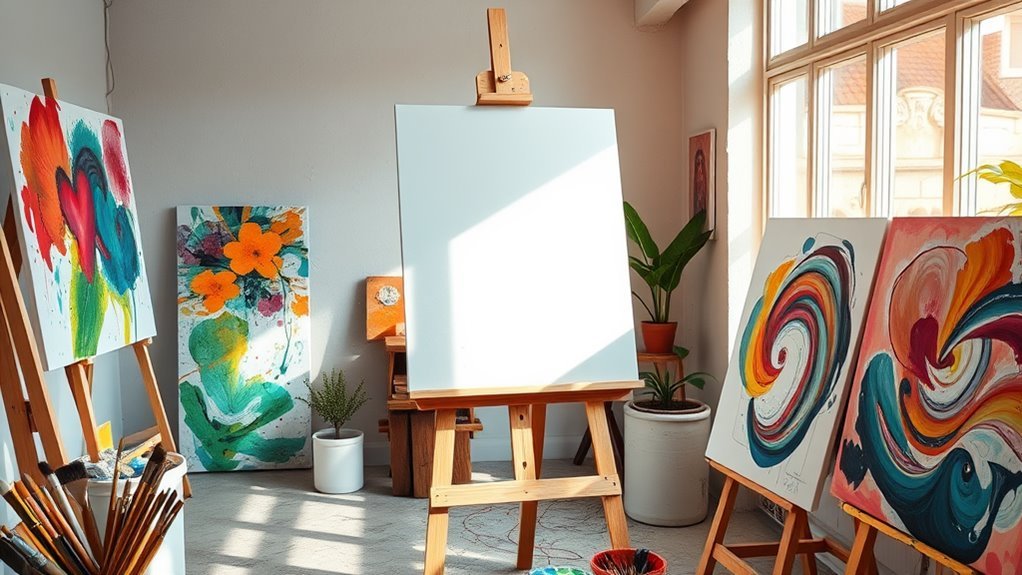
Did you know that abstract art comprises over 60% of contemporary art sales, highlighting its appeal and relevance? As a beginner, embracing abstract art offers a unique opportunity to explore your creative freedom and personal expression. By experimenting with various techniques and tools, you’ll reveal how emotions can guide your artistic journey. The world around you is full of inspiration waiting to be unveiled. Are you ready to find your unique artistic voice?
key Takeaways
- Embrace emotions and ideas, translating them onto canvas with personal expression, letting go of perfection.
- Experiment with mediums like acrylics, watercolors, and diverse tools such as brushes, sponges, or fingers.
- Use colors, shapes, and textures deliberately to convey specific feelings and engage viewers’ emotions.
- Find inspiration in everyday life, observing vibrant colors and patterns to ignite creative imagination.
- Develop a unique artistic voice by practicing regularly and documenting insights from the world around you.
Embracing Your Inner Creativity
When you embrace your inner creativity in abstract art, you’re opening the door to a world where emotions and ideas flourish without the constraints of traditional techniques or expectations. Creating abstract art allows you to explore your feelings and translate them onto the canvas. Enjoy the process as you let go of perfection and focus on personal expression. Every brush stroke and color choice is an opportunity to convey emotions and share your unique perspective. Remember, there’s no right or wrong in abstract art—only your journey. Mistakes aren’t failures but revelations that enhance your artistic path. As you immerse yourself in this creative freedom, you’ll find that your art becomes a true reflection of your innermost thoughts and feelings.
Exploring Techniques and Tools
Plunge into the vibrant world of abstract art by exploring various techniques and tools that can transform your creative vision into reality. Start by experimenting with mediums like acrylics or watercolors to uncover what enhances your abstract painting style. Use diverse tools such as brushes, sponges, or even your fingers to craft unique brush strokes and textures. Techniques like layering, pouring, and splattering add depth and intrigue. Let each layer dry before building up your composition, ensuring a rich, textured finish. Integrate color theory by playing with complementary and analogous schemes, which profoundly influence the mood of your piece. Embrace mindfulness in your process, letting go of expectations to allow spontaneous, authentic expressions to emerge naturally in your artwork.
The Role of Emotion in Abstract Art
While experimenting with various techniques and tools, you’ll uncover that emotion plays a pivotal role in abstract art. It lets you convey feelings and ideas beyond representational forms. Colors, shapes, and textures become your tools to evoke emotions, letting your imagination run wild. Think of blue for calmness or red for passion—these choices aren’t random but deliberate, evoking specific emotional responses.
| Emotion | Color |
|---|---|
| Calmness | Blue |
| Passion | Red |
| Joy | Yellow |
| Mystery | Purple |
Abstract art encourages viewers to engage their emotions, making each experience personal and subjective. The spontaneity of your brushstrokes mirrors human unpredictability, offering raw, unfiltered expression. Like Kandinsky or Rothko, aim to connect with viewers on a visceral level, making your art both powerful and intimate.
Finding Inspiration in Everyday Life
Even in the most routine aspects of daily life, there’s a wealth of inspiration waiting to be uncovered for your abstract art. Look around you—each object, color, and shadow offers a fresh perspective. Notice the vibrant colors of a morning sky or the intricate patterns of leaves swaying in the wind. These experiences can ignite your imagination and influence your creative process. Engage your senses fully; listen to the sounds, inhale the scents, and feel the textures that surround you. Keep a journal or sketchbook handy to capture these moments. Jot down visual observations, emotions, and thoughts that resonate with you. Use photographs or scraps from everyday life as reference points, transforming familiar scenes into abstract masterpieces.
Developing Your Unique Artistic Voice
As you draw inspiration from the world around you, it’s time to channel these insights into developing your unique artistic voice. Embrace the freedom of abstract art to let your imagination run wild. Different colors and techniques offer a playground for your emotions and ideas, free from traditional constraints. Experiment with mediums like watercolor, uncovering what resonates with you. Study influential artists like Wassily Kandinsky and Jackson Pollock for insights into their unique expressions. Trust your intuition and spontaneity, as they often lead to personal revelations and styles. Regularly practice and document your journey, refining your voice with each brushstroke. Over time, consistent exploration will cultivate an artistic style that’s authentically yours, reflecting your individuality and perspective.