
Picture your acrylic masterpiece gleaming under perfect protection, its colors vibrant and preserved. You’ve invested hours creating something special, but now you’re wondering how to shield your artwork from damage and time. The right varnish can make all the difference between a painting that fades and one that endures. Want to uncover which varnishes professional artists trust to keep their work looking pristine? Let’s explore the top five options that’ll transform how you protect your creative passion.
Breathing Color Timeless Archival Print Varnish (1 Gallon Glossy Finish)
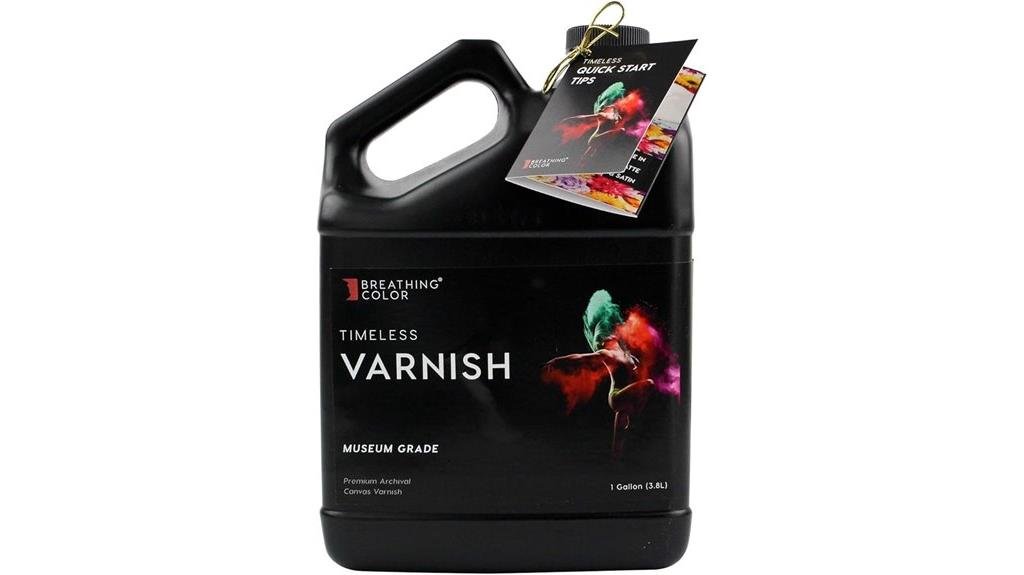
If you’re a fine art or photography enthusiast seeking professional-grade protection for your prints, the Breathing Color Timeless Archival Print Varnish delivers exceptional preservation with its water-based, museum-quality coating. Its proprietary formula provides water resistance, scuff protection, and UV defense, ensuring your artwork remains vibrant and intact. With an easy application using a foam roller or HVLP sprayer and simple warm water clean-up, you’ll appreciate the product’s user-friendly design and superior performance. At a 22-gloss finish on Lyve Canvas, this varnish enhances your artwork’s visual appeal while maintaining archival standards.
Best For: Professional artists, photographers, and fine art print creators seeking museum-quality preservation and protection for their high-end artwork.
Pros:
- Easy application with foam roller or HVLP sprayer
- Water-based formula with simple warm water clean-up
- Provides comprehensive protection including water resistance, scuff protection, and UV defense
Cons:
- Limited to interior use only
- Requires specific storage conditions (72°F ± 5°F / 35-65% Relative Humidity)
- May be relatively expensive compared to standard varnish products
Liquitex Professional Gloss Varnish, 237ml (8-oz)
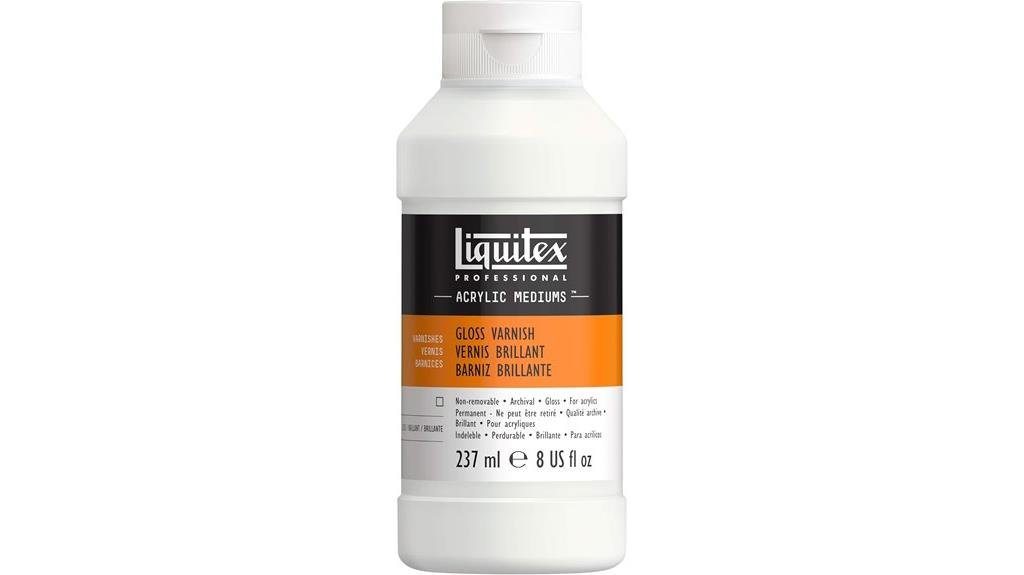
Artists seeking a professional-grade, high-gloss varnish will find the Liquitex Professional Gloss Varnish an exceptional choice for protecting and enhancing acrylic artwork. This archival, non-yellowing varnish provides a clear, glossy finish that’s lightweight and non-toxic. You’ll appreciate its versatility across various art media, from rock painting to traditional acrylic pieces. To achieve the best results, apply 4-6 coats using a silicone brush, alternating vertical and horizontal strokes. Practice your technique beforehand to avoid milky or uneven finishes, ensuring a professional, protective seal that adds shine and durability to your art.
Best For: Professional and amateur artists seeking a high-quality, clear gloss varnish for acrylic and mixed media artwork.
Pros:
- Non-yellowing and water-resistant finish
- Versatile application across multiple art media
- Archival and permanent protection for artwork
Cons:
- Requires practice to achieve perfect application
- Multiple coats needed for optimal results
- Sensitive to application thickness and technique
Timeless Archival Print Varnish for Canvas (1 Pint, Satin Finish)
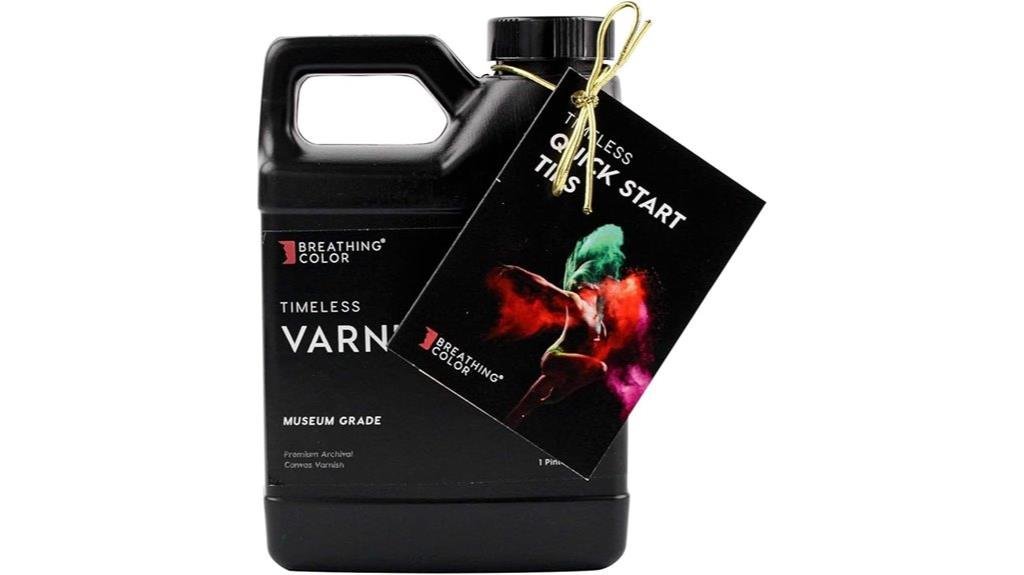
Professionals and fine art enthusiasts seeking superior canvas protection will find the Timeless Archival Print Varnish an exceptional solution. This water-based coating protects and enhances your artwork with remarkable efficiency. You’ll appreciate its easy application using a foam roller or HVLP sprayer, delivering a professional satin finish. Covering 125 sq ft per pint, it meets Breathing Color’s meticulous standards. Its 42% active concentration and 14-gloss rating guarantee your canvas prints remain vibrant and preserved. Conveniently cleanup with warm water, making it an ideal choice for artists prioritizing quality and ease of use.
Best For: Professional artists and photographers seeking high-quality, easy-to-apply canvas protection with a satin finish.
Pros:
- Water-based formula for easy cleanup
- Covers 125 sq ft per pint
- Meets rigorous Breathing Color preservation standards
Cons:
- Limited to wall decor applications
- Requires specific storage conditions (72°F ± 5°F)
- Relatively high price point for small volume
Gloss Varnish for Acrylic Painting, Non-Yellowing & High Gloss Finish
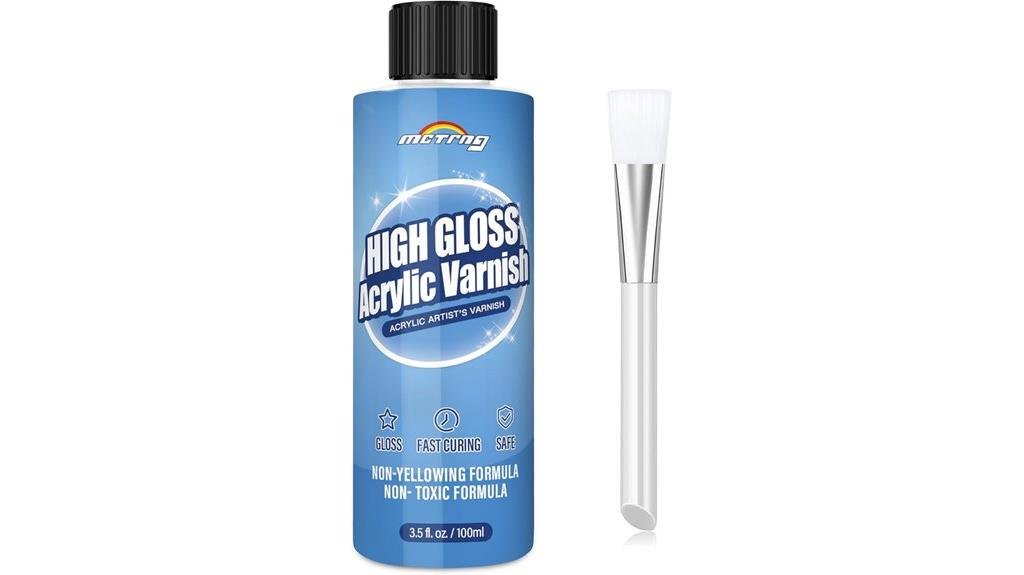
Serious painters seeking a superior protective finish for their acrylic artwork will find a game-changing solution in high-quality gloss varnish. This professional UV varnish offers a non-yellowing, high-gloss finish that seals and protects your creations. It dries quickly to a clear, flexible surface without visible brush marks, enhancing the visual impact of your art. Whether you’re working on canvas, woodwork, or DIY projects, this versatile varnish provides robust protection against dust and UV rays, maintaining the vibrant look of your artwork for years to come.
Best For: Professional and amateur artists seeking a high-quality, long-lasting protective finish for acrylic artworks on various surfaces.
Pros:
- Non-yellowing formula that preserves artwork’s original colors
- Quick-drying and easy to apply with multiple application methods
- Provides UV protection and enhances visual impact of artwork
Cons:
- May be more expensive than standard varnishes
- Requires careful application to avoid brush marks
- Limited effectiveness on extremely textured surfaces
Mont Marte Deco Pudge Craft Varnish (236ml Multi-Purpose Clear Sealer)
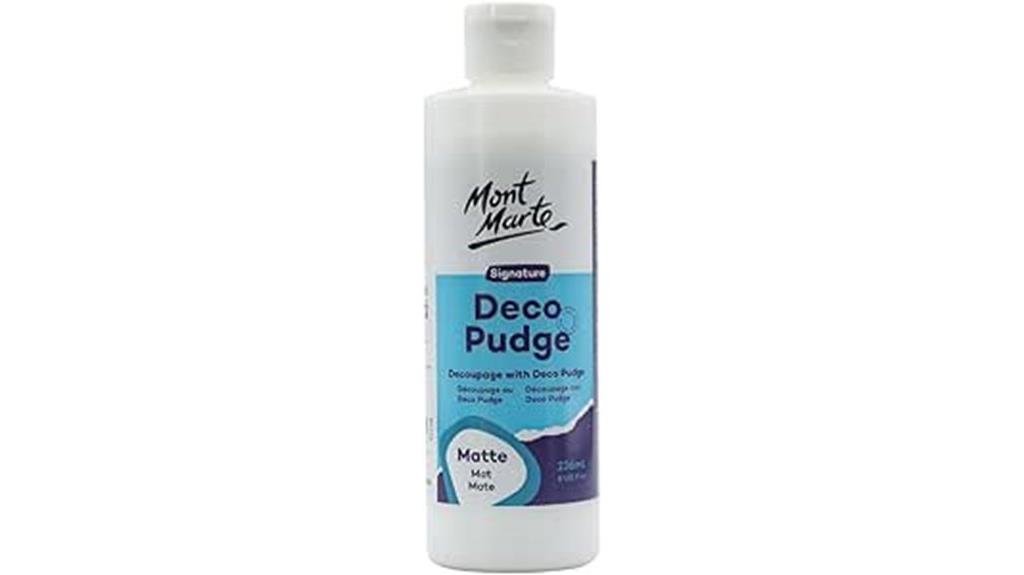
Crafters and DIY enthusiasts will find the Mont Marte Deco Pudge Craft Varnish an incredibly versatile solution for sealing and protecting various creative projects. Its multi-purpose formula works seamlessly on acrylic paints, wood, ceramic, fabric, and air dry clay. You’ll appreciate its non-toxic, water-based composition that allows for easy clean-up. With a matte finish that can be sanded between coats, this varnish delivers an ultra-smooth surface perfect for scrapbooking, decoupage, and glazing techniques. Just remember to apply with a flat taklon brush, wait 30 minutes between coats, and store in a cool, dry place away from direct sunlight.
Best For: Crafters, artists, and DIY enthusiasts looking for a versatile, non-toxic sealer for multiple surfaces and creative techniques.
Pros:
- Multi-purpose formula works on numerous surfaces like acrylic paint, wood, ceramic, and fabric
- Water-based and non-toxic with easy clean-up
- Can be sanded between coats for ultra-smooth finish
Cons:
- Limited to interior use
- Requires multiple coats (2-3) for best results
- Must be carefully stored away from direct sunlight
Key Factors to Consider When Choosing Varnish for Acrylic Paintings
When selecting a varnish for your acrylic painting, you’ll want to carefully consider several critical factors that impact your artwork’s final appearance and longevity. Your primary considerations should include the desired finish (gloss or matte), the varnish’s ability to protect the painting’s surface, its capacity to shield against harmful UV rays, its drying time, and how easily it can be applied. By weighing these elements, you’ll guarantee that your chosen varnish not only enhances your painting’s visual appeal but also provides robust, long-lasting protection.
Finish: Gloss Vs Matte
Choosing between gloss and matte varnish can greatly impact the final appearance and presentation of your acrylic painting. Gloss varnish enhances color vibrancy and adds depth, creating a reflective surface that makes your artwork pop with dimension. It also offers superior protection and water resistance.
Matte varnish, on the other hand, provides a softer, non-reflective finish that can minimize surface sheen and create a more subdued look. However, it might appear less uniform compared to gloss varnish, depending on your application technique.
Your choice ultimately depends on your artistic vision and the specific aesthetic you’re seeking. Consider how each finish will complement your painting’s color palette, texture, and overall mood. Don’t be afraid to experiment and find the varnish that best represents your artistic intent.
Surface Protection Quality
Most artists recognize that surface protection is a critical yet often overlooked aspect of preserving acrylic paintings. When selecting a varnish, you’ll want to evaluate its ability to shield your artwork from environmental threats like UV radiation, moisture, and abrasion.
High-quality art varnishes offer superior protection compared to generic alternatives. You’ll need to ponder the varnish’s chemical composition, light transmission properties, and overall durability. Not all protective coatings are created equal – some will provide more thorough safeguarding than others.
To determine the finest varnish for your specific artwork, it’s recommended that you test different products on sample paintings. This approach allows you to assess which varnish delivers the ideal balance of protection, visual enhancement, and compatibility with your acrylic medium.
UV Ray Defense
Virtually every artist seeks to protect their acrylic paintings from the damaging effects of UV rays, making UV defense a critical factor in varnish selection. When choosing a varnish, you’ll want to prioritize products containing specialized UV absorbers and stabilizers that can effectively block harmful ultraviolet radiation.
The level of protection varies greatly between different varnish formulations. Look for products that specifically highlight their UV-blocking capabilities, as these will provide the most extensive defense against color fading and artwork deterioration. High-quality varnishes with strong UV resistance can drastically extend the lifespan of your acrylic paintings, preserving their vibrant colors and visual integrity even when displayed in areas with substantial sunlight exposure.
Drying Time Factors
When selecting a varnish for your acrylic paintings, drying time becomes a pivotal consideration that can impact both your workflow and the final finish. You’ll want to choose a varnish with faster drying capabilities to enhance your efficiency. Solvent-based varnishes typically dry quicker than water-based alternatives, giving you more flexibility in your creative process.
Environmental factors play a fundamental role in varnish drying. Temperature and humidity can drastically extend or reduce drying time, so be mindful of your workspace conditions. Proper ventilation will help accelerate the drying process, while thick applications can slow it down. For ideal results, apply thin, even coats that allow for faster drying and a smoother finish. Your choice of varnish can make a substantial difference in your painting’s completion time and overall quality.
Application Method Ease
How easily can you apply a varnish to your acrylic painting? The method matters greatly. Water-based varnishes offer simpler cleanup and smoother application compared to solvent-based alternatives. Consider using foam rollers or HVLP sprayers for an even, professional finish that minimizes brush marks and application inconsistencies.
Your varnish’s viscosity directly impacts application ease. Thinner formulations flow more smoothly and require less effort to spread evenly across your artwork. Pay attention to manufacturer-recommended tools, as some varnishes are specifically designed for enhanced usability.
Surface preparation is vital. Confirm your acrylic painting is completely dry and dust-free before application. Clean, smooth surfaces enable more uniform varnish coverage, reducing potential application challenges and helping you achieve a pristine final result.
Non-Yellowing Properties
After mastering even application techniques, artists must confront another critical preservation challenge: preventing color degradation through non-yellowing varnish selection. You’ll want to prioritize UV-resistant, water-based acrylic varnishes that maintain your artwork’s original vibrancy. Archival-quality options protect against sunlight-induced fading and potential color shifts, ensuring your painting remains true to its initial palette.
When evaluating varnishes, look for products specifically labeled as non-yellowing. Water-based formulations tend to provide clearer finishes compared to solvent-based alternatives. By choosing a high-quality, non-yellowing varnish, you’re investing in your artwork’s long-term preservation. Consider professional-grade options that offer superior protection against discoloration, helping your acrylic paintings retain their original brilliance for years to come.
Water-Based Advantages
Water-based varnishes emerge as a superior choice for protecting acrylic paintings, offering artists a range of compelling advantages. You’ll appreciate their environmentally friendly nature, as they’re less toxic and easier to use compared to solvent-based alternatives. Clean-up is a breeze – just warm water will do the trick, eliminating the need for harsh chemicals.
When time is of the essence, water-based varnishes shine. They dry quickly and allow for faster re-coating, giving you more flexibility in your creative process. Additionally, these varnishes maintain the integrity of your artwork by resisting yellowing, which safeguards your painting’s colors to remain true and vibrant over time. With their durable and flexible protective coating, water-based varnishes provide the perfect finishing touch for your acrylic masterpieces.
Long-Term Artwork Preservation
When it comes to preserving your acrylic paintings for years to come, selecting the right varnish isn’t just a finishing touch—it’s a critical conservation strategy. You’ll want to prioritize varnishes that offer robust UV protection to prevent color fading and potential discoloration of your artwork. Consider consulting art conservation professionals who can recommend archival-grade options tailored to your specific painting’s characteristics.
The finish you choose—gloss, satin, or matte—can markedly impact your artwork’s visual presentation while providing essential protective qualities. Water-based varnishes often provide easier application and cleanup, making them an attractive option for artists focused on long-term preservation. By carefully selecting a high-quality varnish, you’re investing in your artwork’s future, ensuring its vibrancy and integrity for decades to come.