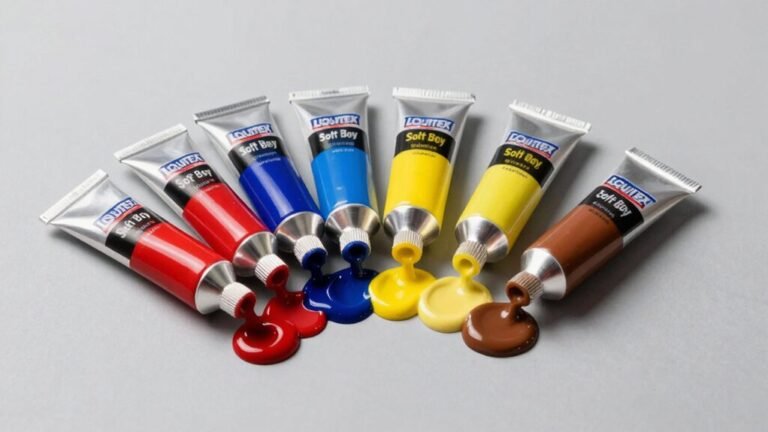

While some artists settle for flat, uninspired surfaces, others crave depth and dimension in their acrylic paintings. You’ll want to explore thickening agents that can transform your artwork from ordinary to extraordinary. These specialized mediums aren’t just additives—they’re tools that can dramatically alter texture, consistency, and visual impact. Curious about how these agents can elevate your artistic technique? Stick around to uncover the secrets professional artists use to create stunning, tactile masterpieces.
U.S. Art Supply Clear Gesso Primer for Acrylic Painting
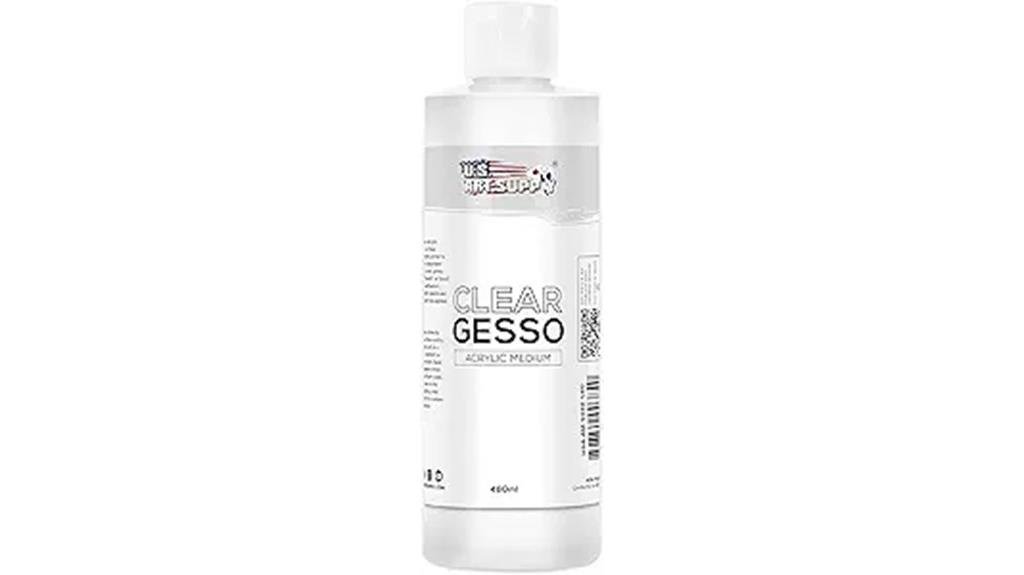
If you’re an artist seeking a versatile and reliable primer for acrylic painting, the U.S. Art Supply Clear Gesso Primer is your go-to solution. It’s a premium, non-toxic primer that delivers exceptional coverage with just one coat. You’ll love its water-based formula that’s easy to apply and clean up, creating a smooth, flexible surface for your artwork. Whether you’re working on canvas, wood, or other surfaces, this clear gesso primer supports various artistic techniques and guarantees your acrylic or oil paints adhere perfectly. It’s durable, non-yellowing, and ideal for artists of all skill levels.
Best For: Artists seeking a versatile, easy-to-use clear gesso primer for acrylic and oil painting across multiple surfaces.
Pros:
- Provides excellent one-coat coverage
- Non-toxic and water-resistant
- Works on multiple surfaces like canvas and wood
Cons:
- Limited to 16 oz size
- May require multiple applications for uneven surfaces
- Slightly higher price point compared to basic primers
U.S. Art Supply Acrylic Modeling Paste (500ml)
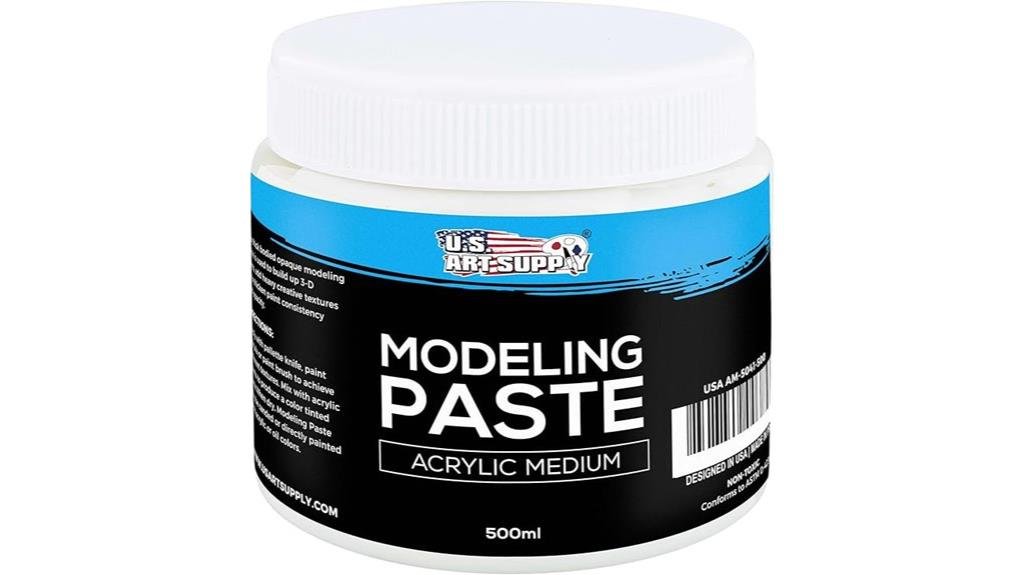
Artists seeking a versatile and robust thickening agent will find the U.S. Art Supply Acrylic Modeling Paste an exceptional choice. You’ll appreciate its lightweight, non-toxic formula that dries to stone-like hardness, allowing you to sand, carve, and shape your artwork with precision. Its superior tooth and absorbency make it ideal for creating 3D, textured surfaces in acrylic painting and mixed media projects. You can easily mix it with paint pigments or inks to customize textures, and it’ll dry quickly while maintaining its shape. With minimal shrinkage and long-lasting durability, this modeling paste gives you the flexibility to explore creative techniques.
Best For: Artists and crafters looking for a versatile, high-quality modeling paste for creating textured 3D surfaces in acrylic and mixed media art projects.
Pros:
- Dries to stone-like hardness and can be sanded, carved, and shaped
- Easily mixable with paint pigments and inks for custom textures
- Water-based, non-toxic, and provides long-lasting durability
Cons:
- Significant shrinkage (approximately 40%) when drying
- May require multiple applications for desired texture
- Limited to 500ml tub size
GRANOTONE Acrylic Gesso Primer, Black
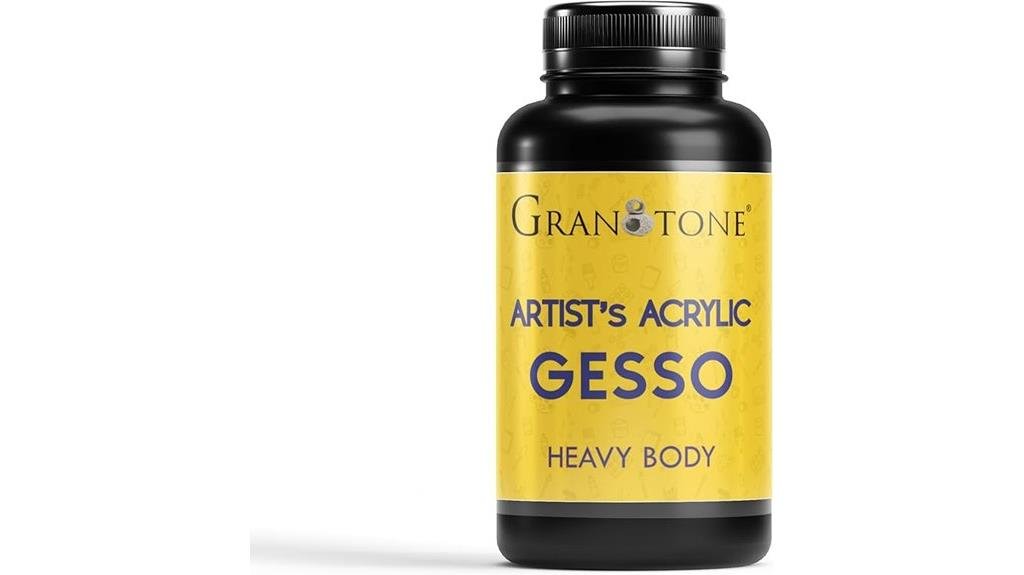
Serious painters seeking a versatile, high-performance black gesso primer will find GRANOTONE Acrylic Gesso Primer an exceptional choice for preparing multiple surfaces. Its thick, non-toxic formula provides superior coverage in one coat, creating a smooth, flexible base for canvas, wood, paper, and more. You’ll appreciate its permanent, non-yellowing finish that works perfectly for interior and exterior projects. Whether you’re a beginner or professional artist, this black gesso primer guarantees an excellent foundation for your acrylic painting, delivering professional-grade results with minimal effort.
Best For: Artists and crafters seeking a high-quality, versatile black gesso primer for multiple surfaces and painting techniques.
Pros:
- Provides superior one-coat coverage
- Non-toxic and flexible formula
- Works on diverse surfaces including canvas, wood, and paper
Cons:
- Limited to 200ml bottle size
- Specifically black color may not suit all project needs
- Requires careful surface preparation before application
Kamenskaya Texture Paste for Acrylic Paint (16.9 fl oz)
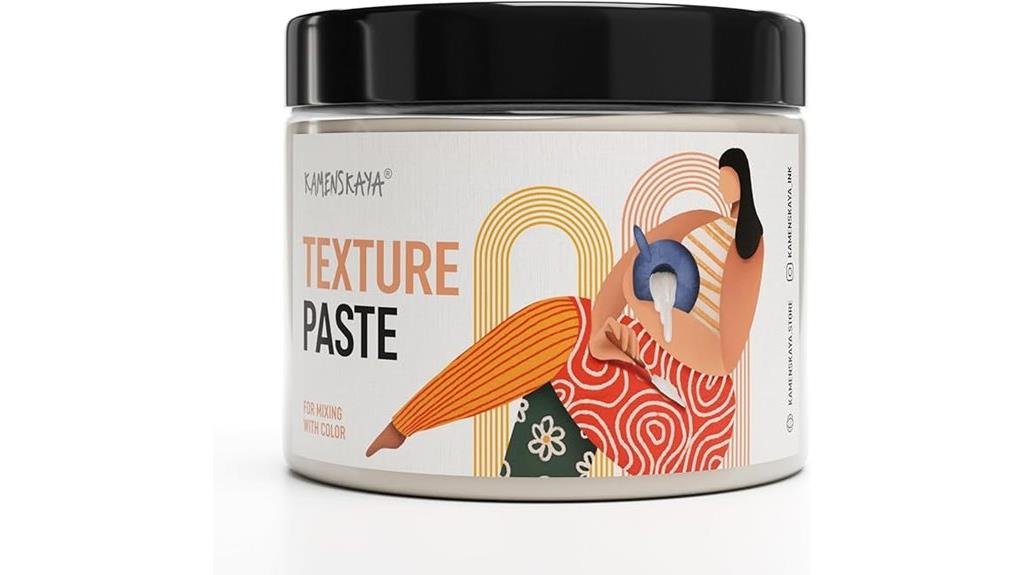
Painters seeking a texture paste with exceptional elasticity and crack resistance will find the Kamenskaya Texture Paste an ideal solution. This European-made product offers a dense, thick plastic mass that holds shape well and provides superior water resistance. You’ll appreciate its ability to be easily colored with minimal pigment and its excellent adhesive properties. With its rubber-enhanced formula, the paste prevents cracking and can be smoothly sanded. While some users note it’s slightly expensive, most artists praise its quality and workability. The paste dries within 24 hours, making it a versatile tool for creating textured, durable artistic surfaces.
Best For: Professional and experienced artists looking for a high-quality, elastic texture paste with exceptional adhesive properties.
Pros:
- Water-resistant and crack-resistant formula
- Easy to color and spread
- Holds shape well and can be sanded smoothly
Cons:
- Relatively expensive compared to alternative products
- Occasional inconsistent fill levels in packaging
- May require additional pigment for desired opacity
Liquitex Professional Effects Thickening Gel (237ml)
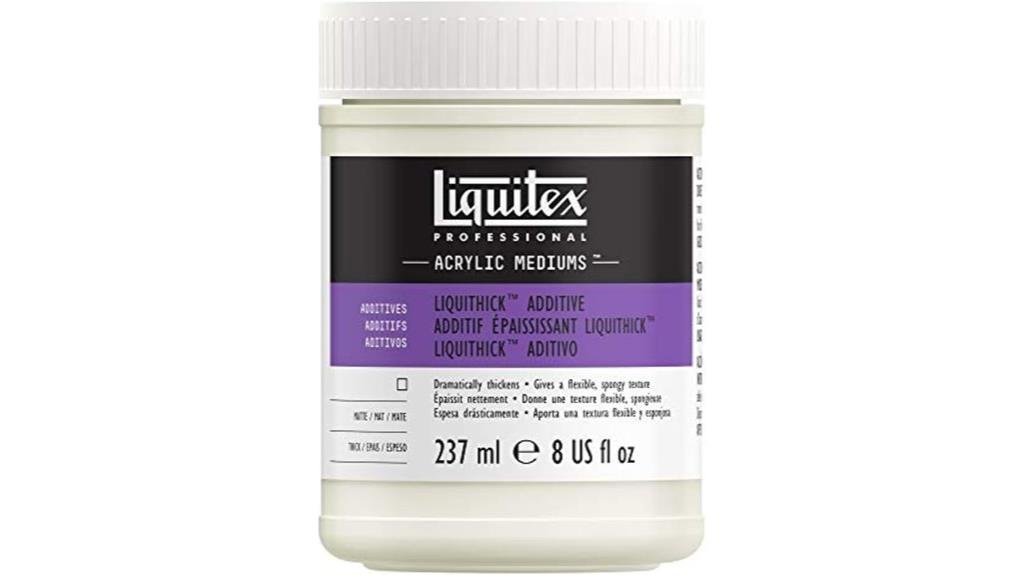
Creatives looking to give their acrylic artwork a sculptural dimension will find the Liquitex Professional Effects Thickening Gel a game-changing medium. This binder-free gel lets you transform your paints, adding oil or encaustic-like handling characteristics with just a small amount. You can thicken acrylic paints to a cake or sculptural consistency, perfect for creating textured, matte finishes on canvas or metal surfaces. However, be cautious—don’t add more than 25% of the gel, as it can compromise the paint film’s stability. Ideal for artists seeking versatile, professional-grade effects.
Best For: Professional and advanced acrylic artists seeking to add sculptural texture and dimensional effects to their artwork.
Pros:
- Transforms acrylic paint to oil or encaustic-like handling characteristics
- Creates matte, textured finishes on multiple surfaces
- Versatile medium that works with opaque colors without changing color position
Cons:
- Cannot exceed 25% gel concentration without compromising paint film stability
- Limited to acrylic and specific paint types
- Requires careful application to maintain paint integrity
U.S. Art Supply White Gesso Primer for Oil & Acrylic Artists
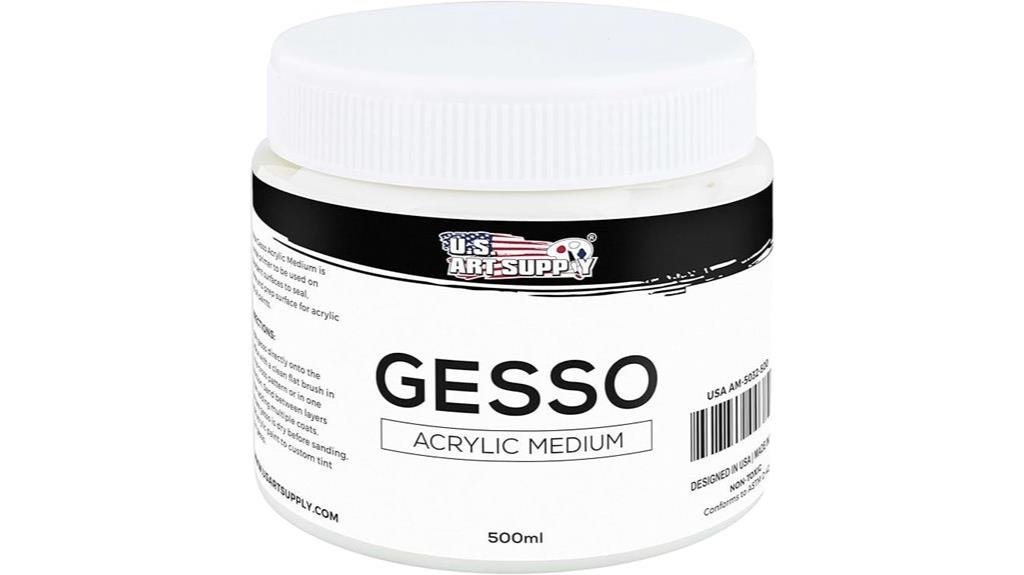
Artists seeking a versatile and reliable primer will find the U.S. Art Supply White Gesso Primer an excellent choice. You’ll appreciate its lightweight, non-toxic formula that primes surfaces for both acrylic and oil paints. With just one coat, you’ll get excellent coverage and a smooth, flexible finish. The water-based medium allows you to blend with acrylic colors or pigments, creating personalized grounds. Plus, it dries quickly, adheres perfectly to canvas and watercolor paper, and provides a non-yellowing surface that supports various artistic techniques.
Best For: Artists of all skill levels looking for a high-quality, versatile white gesso primer for acrylic and oil painting projects.
Pros:
- Excellent one-coat coverage with smooth, flexible finish
- Non-toxic and water-based formula for easy application
- Versatile primer that works on multiple surfaces like canvas and watercolor paper
Cons:
- Limited to white color (requires mixing for custom colors)
- Only available in 16.9-ounce size
- May require multiple coats for certain surfaces or desired texture
Liquitex Professional Fluid Medium, 237ml (8-oz), Slow-Dri Blending
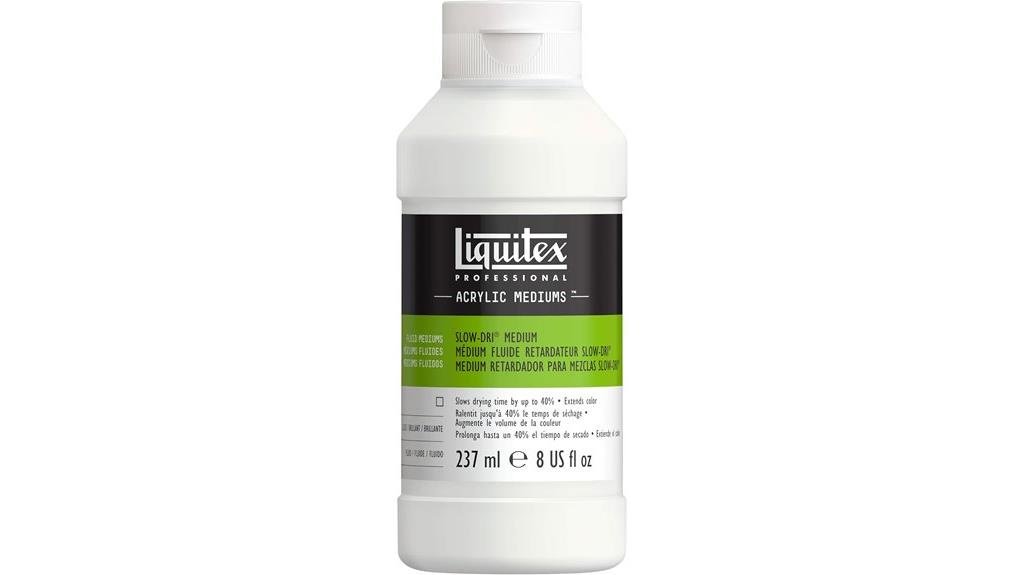
Acrylic enthusiasts seeking a game-changing medium for smoother blending will find the Liquitex Professional Fluid Medium a perfect solution. This unique formulation extends drying time up to 40%, allowing you to blend colors more seamlessly. It keeps your paint opaque while making it easier to move around, similar to oil painting without the mess. The medium thins paint, prevents thickness, and works wonderfully for paint by number projects and airbrushing. It’s water-resistant, non-toxic, and compatible with Liquitex Professional Acrylic Paint Colors.
Best For: Acrylic artists seeking extended blending time and smoother color transitions in their painting projects.
Pros:
- Extends drying time by up to 40%, enabling better color blending
- Non-toxic, water-resistant, and compatible with Liquitex Professional Acrylic Paints
- Versatile for various techniques like paint by number and airbrushing
Cons:
- Hard to find product in stores
- Marginally responsive customer support
- High gloss medium can cause uneven gloss if not applied consistently
Factors to Consider When Choosing Thickening Agent for Acrylic Paint
When selecting a thickening agent for your acrylic paint, you’ll need to carefully evaluate several key factors that impact your artistic outcome. Your paint’s desired texture, surface adhesion requirements, and expected drying time will considerably influence which thickening agent will work best for your specific project. Consider also the compatibility with your painting materials and how the thickening agent might support or enhance your intended artistic technique.
Paint Texture Requirements
Depending on your artistic vision, the texture and consistency of acrylic paint can dramatically transform your creative expression. Whether you’re aiming for thick, sculptural impasto techniques or smooth, fluid brushstrokes, selecting the right thickening agent is pivotal.
Your chosen technique will directly influence the type of medium you’ll need. For palette knife painting or three-dimensional effects, you’ll want agents that create a heavier, paste-like consistency. If you’re pursuing wet-on-wet blending, you’ll need mediums that promote seamless color changes and slower drying times.
Consider your painting surface and desired finish, as these factors also impact your thickening agent selection. A canvas might require different properties compared to paper, and your preferred aesthetic—matte, gloss, or satin—will further guide your choice.
Surface Adhesion Properties
Beyond the paint’s texture and consistency, another critical aspect of selecting the right thickening agent lies in its surface adhesion properties. You’ll want a thickener that creates a strong, flexible film capable of adhering to multiple surfaces like canvas, paper, and wood without compromising paint quality.
Look for a thickening agent that promotes durable adhesion and resists cracking or peeling over time. The ideal product will maintain the paint’s color vibrancy while ensuring smooth, even coverage. Water-resistant and non-yellowing properties are additional benefits that can protect your artwork’s long-term appearance.
When evaluating thickening agents, prioritize those that integrate seamlessly with acrylic paints, preserving their handling characteristics and visual appeal. Your choice should ultimately enhance, not hinder, your artistic expression.
Drying Time Expectations
Because drying time greatly impacts an artist’s workflow, understanding how thickening agents influence paint’s wet periods becomes essential. When you choose a thickening agent, you’ll want to ponder how much it’ll extend your working time. Different agents provide varying degrees of drying time modification, so you’ll need to match the medium to your specific painting technique.
Temperature and humidity will also affect how long your paint remains workable. Higher concentrations of thickening agents typically create longer wet periods, giving you more opportunity to blend and manipulate colors. However, you’ll want to experiment to find the right balance that suits your artistic style and project requirements. Carefully selecting the appropriate thickening agent can markedly enhance your acrylic painting experience.
Material Compatibility Factors
Just as drying time affects your painting process, the compatibility of thickening agents with your acrylic paint plays a critical role in achieving preferred results. You’ll want to carefully evaluate several key factors before selecting an additive.
First, guarantee the thickening agent won’t compromise your paint’s chemical composition or color integrity. Check its pH compatibility to prevent unwanted reactions that could alter your artwork’s appearance. Consider how the agent will impact viscosity, which directly influences paint handling and application techniques. Additionally, assess potential changes to the paint’s transparency, opacity, and surface sheen.
Most importantly, verify the long-term stability and adhesion of the thickened paint to ensure your artistic vision remains intact over time. Thoughtful selection prevents unintended consequences.
Artistic Technique Goals
Every artist knows that selecting the right thickening agent depends critically on your specific artistic technique goals. Your desired texture and painting style will guide your choice, whether you’re aiming for smooth blending, impasto effects, or sculptural dimensionality.
If you’re planning techniques like glazing or dry brushing, you’ll need to carefully consider the viscosity and flow properties of different thickeners. Heavy-bodied mediums work best for creating 3D textures, while more flexible gel-like agents suit fluid painting approaches. Consider how the thickening agent will interact with layering, printmaking, or mixed media work.
Your artistic vision ultimately determines which thickening agent will help you achieve the precise visual and textural effects you’re seeking.
Project Durability Needs
When you’re planning an acrylic painting project, selecting a thickening agent requires careful consideration of its long-term durability and performance characteristics. Your choice will directly impact the painting’s ability to withstand environmental challenges and maintain its structural integrity over time.
Consider the artwork’s intended display environment—indoor or outdoor settings demand different durability requirements. Some thickening agents enhance paint flexibility and crack resistance, while others might compromise the paint film’s strength. The adhesion between the thickening agent and acrylic paint is vital for creating a stable, long-lasting artwork.
Consulting experienced artists and reference materials can provide invaluable insights into selecting thickening agents that match your specific project durability needs. Your informed choice will help safeguard your artwork’s resilience and aesthetic quality.
Budget Constraint Considerations
Although artists dream of unlimited resources, budget constraints often play an essential role in selecting thickening agents for acrylic paint. You’ll find thickening agents range from affordable cornstarch to premium acrylic mediums with considerably higher prices.
When working with limited funds, you’ll want to carefully evaluate your options. Testing different thickening agents can help you find the best balance between cost and desired painting effects. While investing in a higher-quality thickening agent might provide superior results, you’ll need to weigh this against your project’s financial limitations.
Consider your overall budget and project requirements. Some less expensive alternatives might work adequately, but don’t compromise your artistic vision. Strategically select a thickening agent that meets both your creative needs and financial constraints.
Application Method Preferences
Since your painting technique directly influences thickener selection, artists must carefully match their application method with the right acrylic paint thickener. Brush painters will want a smooth, even consistency that reduces dripping, while palette knife users benefit from substantial thickeners that hold their shape for impasto techniques. If you’re working with an airbrush, you’ll need a thinner, less viscous medium to avert nozzle clogging. Drip and pour artists might prefer fluid thickening agents that enable dynamic paint movement. Your chosen application method determines the ideal thickener’s viscosity, texture, and behavior. Whether you’re creating detailed brush strokes, sculpting thick impasto layers, or experimenting with fluid paint techniques, selecting the right thickener guarantees your artistic vision translates precisely onto the canvas.