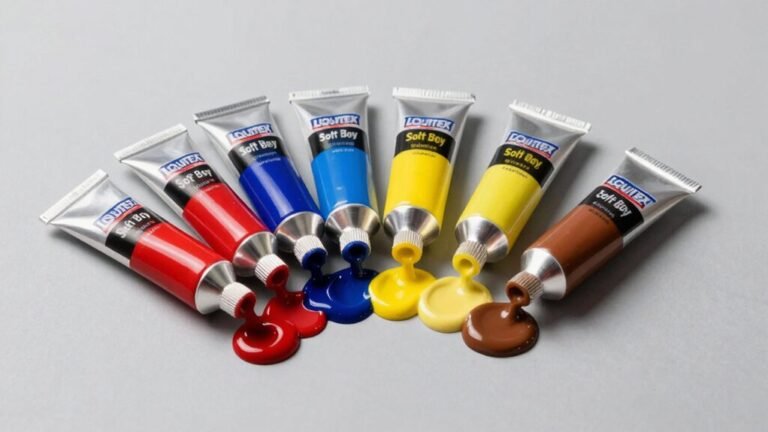

Whether you’re an aspiring artist or a seasoned professional, choosing the right palette can make or break your acrylic painting experience. You’ll want something that keeps your colors fresh, provides ample mixing space, and withstands the rigors of creative expression. But not all palettes are created equal. What if you could uncover the top five palettes that professional artists swear by, each with unique features that could transform your artistic workflow?
Art Paint Tray Palette for Kids, 22 Pieces
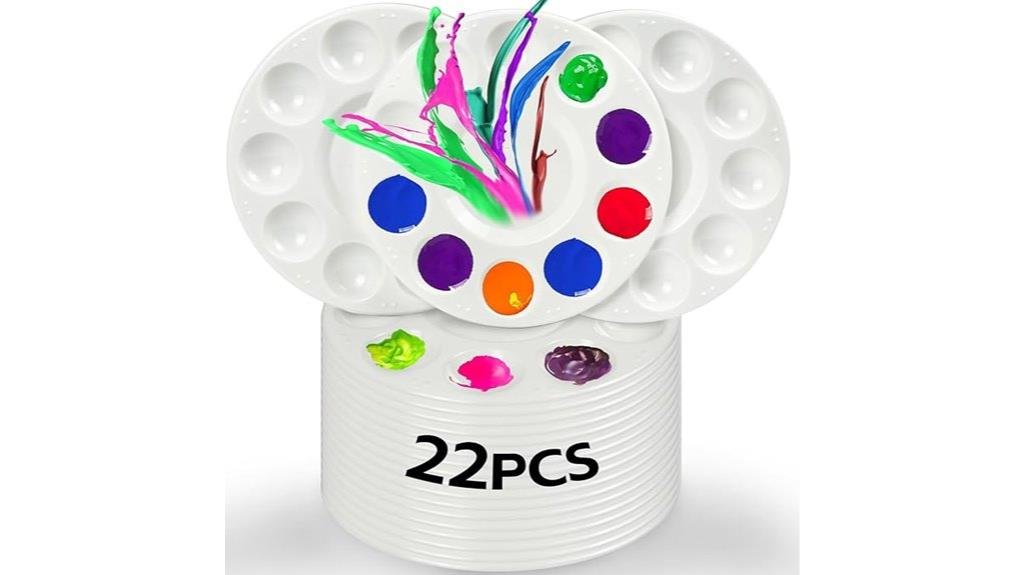
If you’re looking for the perfect painting companion for young artists, the Art Paint Tray Palette for Kids, 22 Pieces, is a game-changer. Its sturdy, break-proof plastic design features 10 wells and a central reservoir, measuring 6.7 x 6.7 inches. You’ll love how easily you can clean its smooth surface. Whether you’re hosting a party, working on a school project, or taking art classes, this palette will inspire creativity and make painting more fun. It’s versatile enough for art projects and even decorating cupcakes or candies. With a 30-day money-back guarantee, you can’t go wrong.
Best For: Kids aged 3-12 who enjoy art projects, painting, and creative activities at home, school, or during parties.
Pros:
- Durable and break-proof plastic design
- Multiple wells for organizing different paint colors
- Easy to clean smooth surface
Cons:
- Limited to 10 paint wells
- Might be small for large group projects
- Plastic material may not be as premium as ceramic palettes
30 PCS White Plastic Paint Palettes for Painting and Art
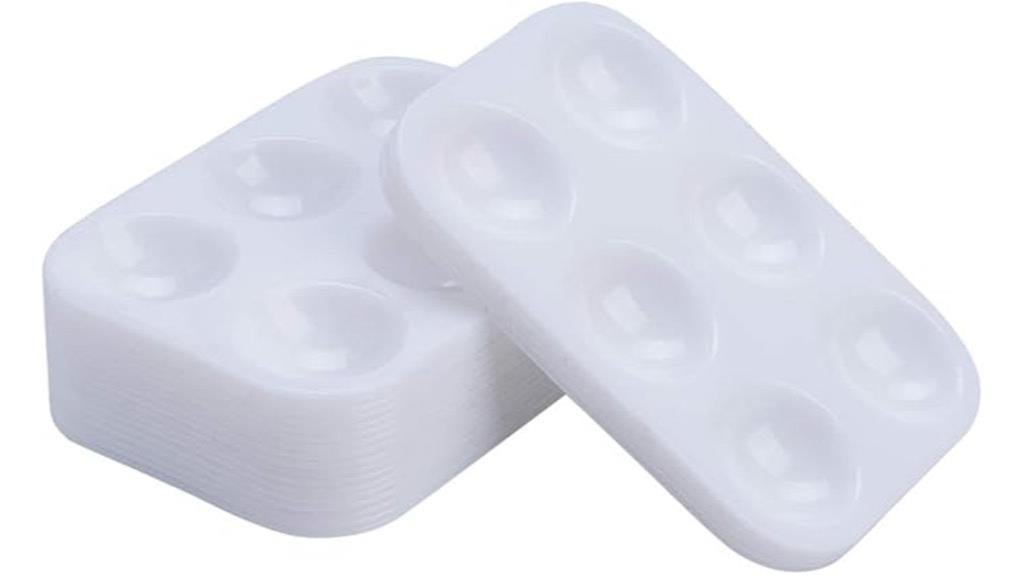
Artists and crafting enthusiasts will find the 30 PCS White Plastic Paint Palettes an ideal solution for color mixing and painting projects. With six wells per palette, you’ll easily separate different pigments while enjoying a durable, smooth plastic surface. These 5 x 3.5 x 0.5-inch palettes are perfect for sip and paint events, children’s classes, and art workshops. They’re convenient, easy to clean, and offer great value. Whether you’re a student, professional, or hobbyist, these white palettes will support your creative endeavors with their practical design and reliable quality.
Best For: Artists, students, and crafting enthusiasts who need a reliable, multi-well palette for color mixing and painting projects.
Pros:
- Convenient 6-well design for separating different colors
- Durable white plastic material that’s easy to clean
- Versatile size suitable for various painting events
Cons:
- Some palettes may arrive with cracks
- Limited to white color
- Potentially fragile plastic construction
Hue Haven Acrylic and Oil Palette with 10 Complementary Brushes
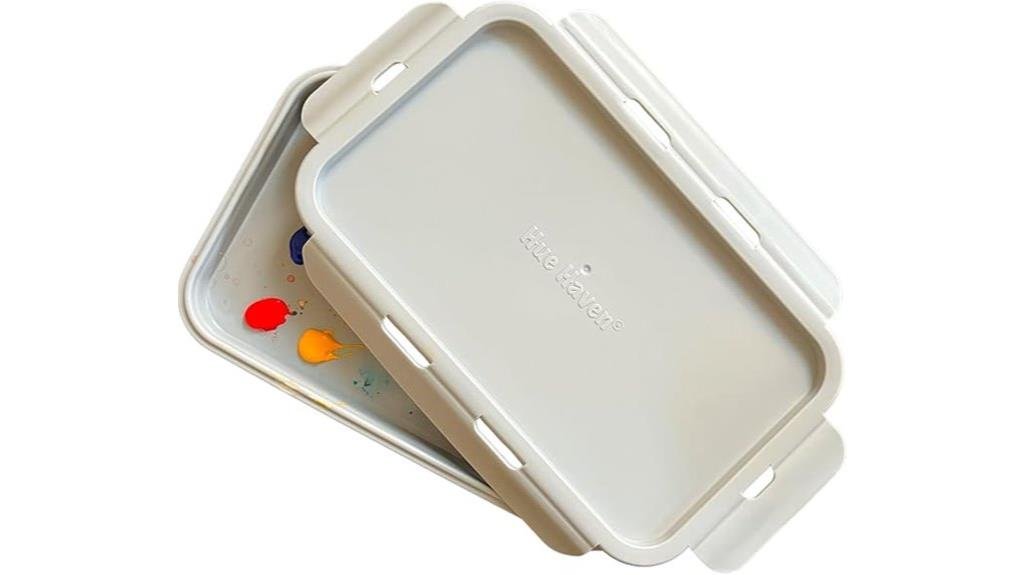
Painters seeking a versatile and portable painting solution will appreciate the Hue Haven Acrylic and Oil Palette, which offers an innovative design that keeps both acrylic and oil paints fresh for extended periods. Its airtight lid and soft silicone material create an ideal mixing surface in gray, allowing you to blend colors seamlessly. You’ll benefit from the 10 complementary nylon brushes and the palette’s compact size, making it easy to transport between your home and studio. Despite some mixed reviews about durability, the palette provides a practical solution for artists looking to minimize paint waste.
Best For: Artists who need a portable, airtight palette for keeping acrylic and oil paints fresh during extended painting sessions.
Pros:
- Airtight design preserves paint moisture for multiple days
- Includes 10 complementary nylon brushes
- Versatile mixing surfaces on both lid and bottom
Cons:
- Potential for lid component breakage
- Some difficulty keeping acrylic paint wet
- Challenging to clean thoroughly
U.S. Art Supply 17-Well Artist Painting Palette (2 Pack)
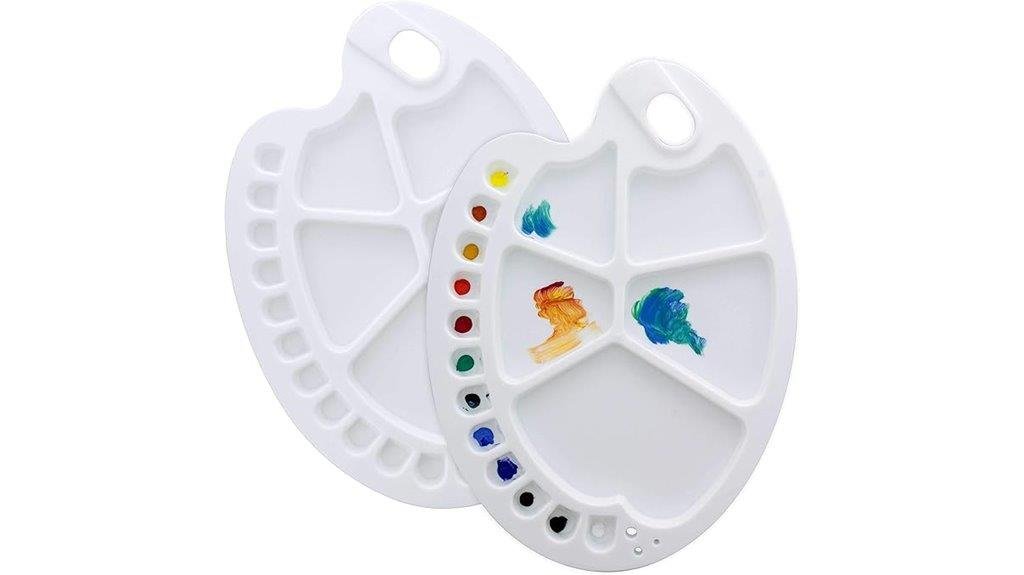
The U.S. Art Supply 17-Well Artist Painting Palette offers a versatile solution for painters seeking an organized workspace. With 17 wells—12 small outer sections and 5 large reservoirs—you’ll have ample room to separate and mix colors. The lightweight, molded plastic design includes a thumb hole, making it comfortable for both right and left-handed artists. Whether you’re working with tempera, watercolor, acrylic, or oil paints, this palette’s durability and brush holders guarantee you’ll have a reliable tool. Its stackable nature and easy washability make storage and cleanup a breeze, while the lifetime satisfaction guarantee provides added peace of mind.
Best For: Professional artists, art students, and hobbyists seeking a versatile, well-organized painting palette for multiple paint types.
Pros:
- 17 wells provide ample space for color separation and mixing
- Lightweight and durable plastic construction
- Suitable for multiple paint types including tempera, watercolor, acrylic, and oil
Cons:
- Limited to two palettes per pack
- Plastic material may not be as premium as wooden palettes
- Thumb hole design might not be comfortable for all users
Tamaki 2 Pack Acrylic Paint Palette with Thumb Hole
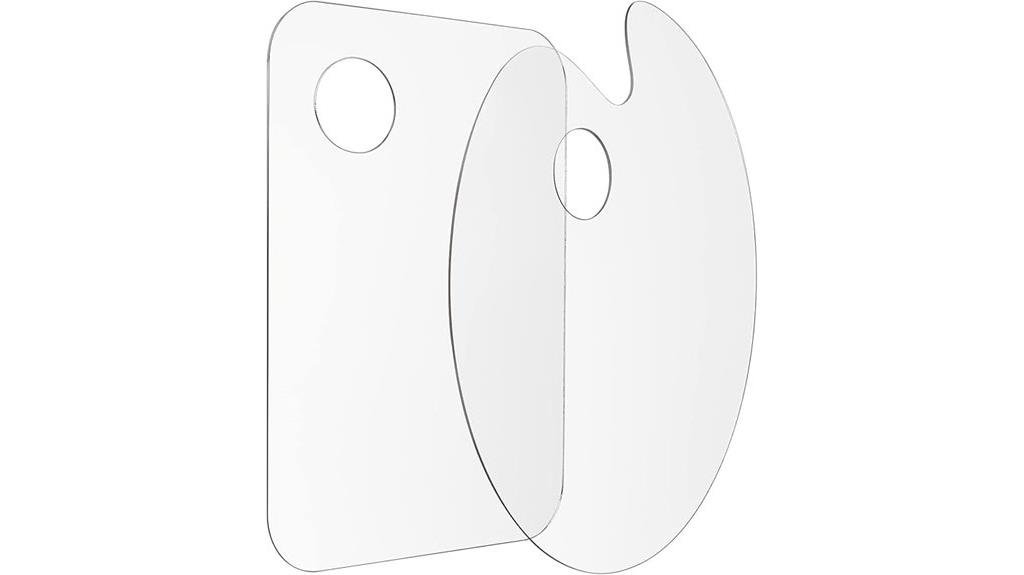
Creative individuals seeking a versatile and portable painting companion will find the Tamaki 2 Pack Acrylic Paint Palette with Thumb Hole an exceptional choice. You’ll appreciate its two distinct acrylic palettes—one rectangular and one oval—both measuring 11.8 x 7.9 inches. The high-quality transparent material offers a crystal-clear surface perfect for color mixing, while the smooth edges and thumb hole guarantee comfortable handling during your artistic endeavors. Whether you’re a student, teacher, or professional artist, these lightweight palettes will easily fit in your bag and support your creative process.
Best For: Artists of all skill levels seeking a versatile, portable, and comfortable painting palette for color mixing.
Pros:
- Two different shaped palettes for varied painting needs
- Crystal clear, transparent surface for accurate color assessment
- Lightweight and easily transportable design
Cons:
- Not dishwasher or oven safe
- Requires careful cleaning to prevent scratches
- Limited to non-abrasive cleaning methods
Factors to Consider When Choosing Palette for Acrylic Paint
When selecting an acrylic paint palette, you’ll want to weigh several key factors that impact your painting experience. Consider the palette’s material durability, its ability to facilitate smooth color mixing, and how well it keeps your paints wet during your creative process. Your ideal palette should also offer comfort during painting, be easily portable, and provide convenient storage options.
Material Durability Matters
Because durability plays a critical role in selecting the right palette for acrylic painting, artists must carefully evaluate material characteristics before making a purchase. You’ll want a palette that can withstand frequent cleaning, support the weight of acrylic paints, and resist damage during intense painting sessions.
Plastic palettes offer exceptional break-resistance and long-lasting performance, while silicone options provide flexibility and easy cleaning. Wood palettes might absorb paint and stain, potentially limiting their lifespan. Metal palettes clean easily but can dent or rust without proper maintenance.
Consider your painting style and frequency of use when selecting a palette. Your chosen material should balance durability, ease of cleaning, and resistance to warping or cracking under regular artistic conditions.
Color Mixing Ease
Since color mixing represents a fundamental skill in acrylic painting, selecting a palette that enhances this process becomes essential for artists. You’ll want a smooth, non-porous surface that allows effortless blending of paint colors. Look for palettes with larger mixing wells that provide ample space for thoroughly combining multiple hues. Transparent or pale-colored surfaces help you more accurately perceive and create desired color combinations.
Consider palettes with curved edges, which facilitate smoother paint flow during mixing. The right palette material and design can also maximize the time your acrylic paint remains wet and workable. By choosing a palette that supports easy color mixing, you’ll streamline your painting process and achieve more precise, vibrant results.
Paint Wetness Duration
Countless artists struggle with the rapid drying time of acrylic paints, making palette selection crucial for maintaining paint workability. You’ll want to look for palettes with airtight lids and moisture-retaining features that can keep your paint wet for 1-3 days or even longer. Misting your paint can also help extend its usable time, preventing premature drying.
When choosing a palette, consider its ability to preserve paint moisture. Some professional-grade palettes offer superior paint preservation compared to basic models. Oil painters have an advantage, with some palettes keeping their paints wet for over a week. For acrylic artists, using techniques like creating a water barrier and selecting specialized palettes can greatly improve paint longevity and reduce waste.
Portability and Storage
Artists know that a portable palette can make or break your painting experience. When selecting a palette for acrylic painting, consider its weight, size, and design. Look for lightweight options that’ll easily slip into your art bag or backpack, ensuring you can create wherever inspiration strikes.
Durability matters too. Choose palettes with sturdy construction that won’t crack or break during transport or frequent use. Stackable or nesting designs help you optimize storage space, while models with secure lids keep your paints moist during travel. Whether you’re heading to a workshop, classroom, or outdoor painting session, a well-designed palette can streamline your artistic workflow and protect your valuable paint supplies.
Comfort During Painting
While painting can be an exhilarating creative process, prolonged sessions can quickly become uncomfortable without the right palette. You’ll want to choose a palette that minimizes hand and wrist fatigue through ergonomic design features like thumb holes and shapes that naturally contour to your hand.
Consider lightweight materials such as acrylic or plastic that reduce physical strain compared to heavier options. Look for palettes with smooth, non-slip surfaces that enhance paint manipulation and provide better control. The ideal palette should allow easy reach and precise paint placement, ensuring you can focus on your artwork without discomfort.
Pay attention to palette size and shape, selecting one that fits comfortably in your hand and supports extended painting sessions without causing unnecessary physical stress.
Size and Well Count
When selecting a palette for acrylic painting, the size and number of wells play a crucial role in your creative workflow. Consider your painting style, typical color usage, and workspace requirements. Larger palettes with more wells offer better color organization and mixing opportunities, while smaller palettes provide portability and convenience for outdoor or travel painting.
The depth of wells matters too. Shallow wells help prevent paint from drying quickly, but deeper wells accommodate more paint volume. Your ideal palette should feel comfortable to hold and match your specific painting needs. Whether you’re working in a studio or on-location, choose a palette that supports your artistic process and allows efficient color management.
Cleaning and Maintenance
Because acrylic paint dries quickly and can permanently bond to surfaces, palette cleaning and maintenance become critical considerations for artists selecting the right painting tool. You’ll want to choose palettes with smooth, non-porous surfaces that prevent paint from seeping into crevices and make cleaning easier.
Look for palettes featuring removable or detachable elements that’ll allow you to thoroughly clean between uses. Plastic and silicone materials are particularly advantageous due to their easy-to-clean properties. Regularly using palette knives or scrapers can help remove dried paint and maintain a smooth surface.
Proper cleaning and storage are essential to prevent paint buildup and preserve your palette’s condition. By selecting a palette with these maintenance-friendly characteristics, you’ll guarantee a more efficient and enjoyable painting experience.
Versatility Across Mediums
Artists can level up their painting versatility by selecting palettes designed to support multiple mediums. When choosing a palette for acrylic paint that’ll also work with watercolor, gouache, or oil, look for smooth, non-porous surfaces that clean easily between uses. Compartmentalized designs with separate wells prevent unintended color mixing and help you maintain medium-specific areas.
Consider portable, lightweight palettes that’ll adapt to your changing artistic needs. Materials that can withstand different paint types without staining or absorbing pigments are essential. You’ll want a palette that allows for seamless mixing and blending across various paint mediums, giving you the flexibility to experiment and expand your artistic techniques without investing in multiple palette sets.