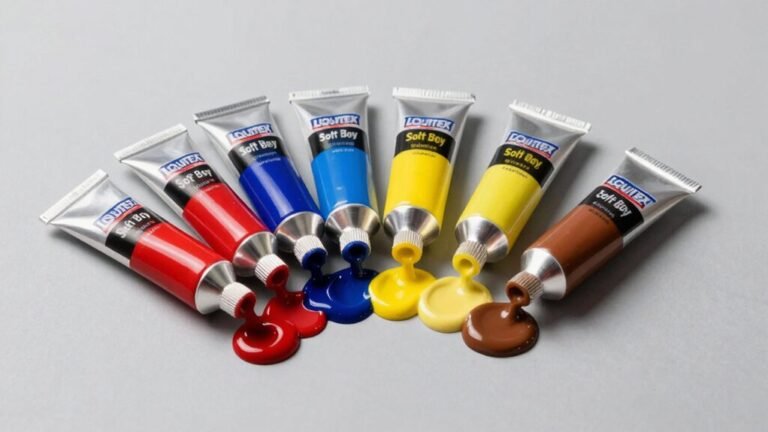

You might think paint extenders are just for house painters, but professional artists know they’re game-changers for precision work. These innovative tools aren’t just about reaching high places—they’re about expanding your creative potential. Imagine tackling complex acrylic projects with unprecedented ease and control. What if the right paint extender could transform how you approach large-scale paintings? The top 5 models in the coming years are about to revolutionize your artistic workflow.
Aolamegs Multi-Angle Paint Brush Extension Tool for High Ceilings
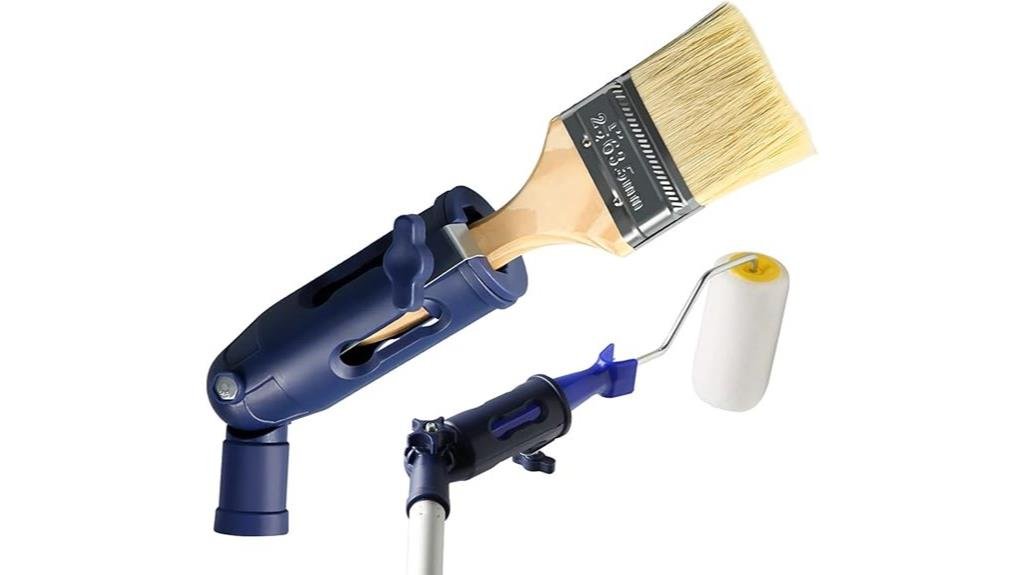
If you’re tackling high ceiling painting projects and want to avoid the risks of ladder climbing, the Aolamegs Multi-Angle Paint Brush Extension Tool offers a versatile solution. Its multi-angle fixation allows you to adjust to any angle, reaching difficult spots like ceiling corners, wall edges, and stairwells. The 3-in-1 extender fits most brush sizes and connects easily to standard extension rods. While some users note the tightening knob can be tricky and brushes might occasionally slip, the tool ultimately provides a safer alternative to traditional ladder painting methods.
Best For: DIY painters, homeowners, and professionals seeking a safe way to paint high areas without using ladders.
Pros:
- Adjustable multi-angle design for hard-to-reach spaces
- Enhances painting safety by eliminating ladder risks
- Compatible with standard extension poles and most brush sizes
Cons:
- Difficult to tighten knob securely
- Brush may occasionally slip or fall
- Potential for unscrewing during use
Multi-Angle Paint Brush Extender for High Ceilings
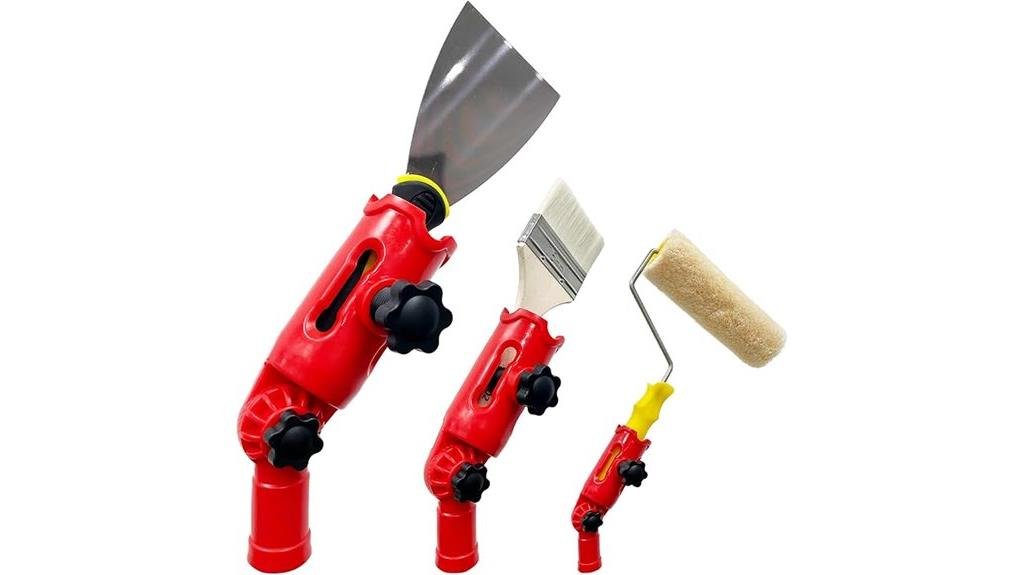
Painters tackling high ceilings need a reliable multi-angle paint brush extender that transforms challenging overhead work into a safe, efficient task. This tool offers 160° rotation and two brush head directions, allowing you to navigate tricky corners and edges with ease. You’ll appreciate its versatility—compatible with paint rollers, brushes, and scrapers—and the ability to switch tools quickly without changing diameters. By eliminating ladder risks, you’ll work smarter and safer, reaching stairwells, frames, and high surfaces effortlessly while maintaining precision and comfort.
Best For: Professional and DIY painters needing to reach high ceilings, corners, and hard-to-access areas without using a ladder.
Pros:
- 160° rotation allows for flexible painting angles
- Eliminates ladder safety risks
- Compatible with multiple painting tools
Cons:
- May require practice to master precise angle adjustments
- Potentially more expensive than traditional painting tools
- Limited effectiveness for extremely complex ceiling geometries
Extension Pole for Airless Paint Sprayer Guns Spray Painting Wand
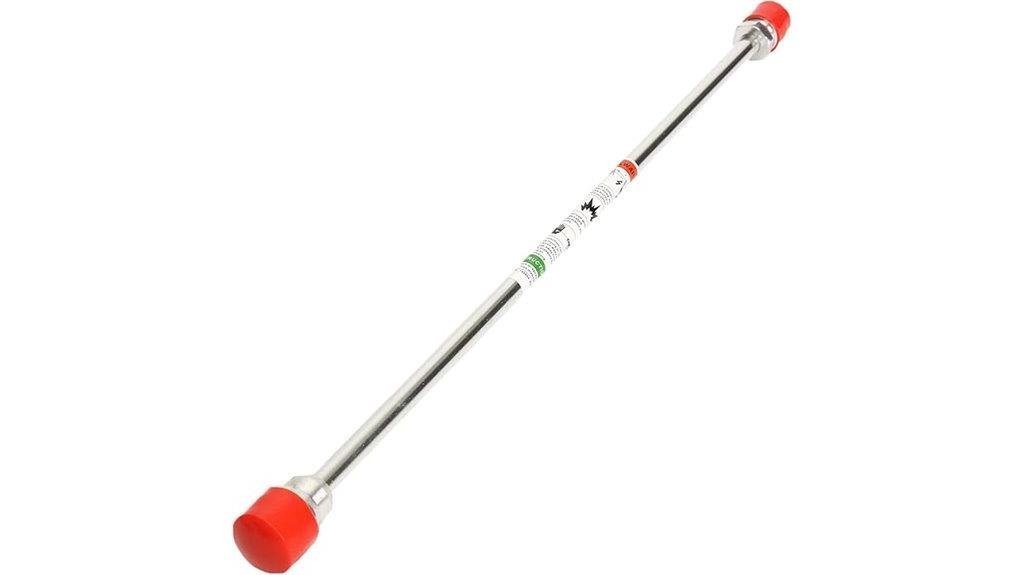
Professional painters and DIY enthusiasts seeking maximum reach and precision during spray painting projects will find the Airless Paint Sprayer Gun Extension Pole an essential tool. With its 20-inch aluminum alloy construction and 7/8 inch universal thread, this lightweight extension rod fits most airless sprayer guns. You’ll appreciate its corrosion-resistant design and high-strength capabilities, enabling you to tackle both interior and exterior painting tasks with ease. Its robust 3300 PSI maximum pressure rating guarantees reliable performance, while the simple installation and durable Wagner-style sealing prevent paint leakage during your spray painting projects.
Best For: Professional painters and DIY enthusiasts who need an extended reach for spray painting projects with airless paint sprayers.
Pros:
- Universal thread fits most airless sprayer guns
- Lightweight and corrosion-resistant aluminum alloy construction
- High pressure rating of 3300 PSI for reliable performance
Cons:
- Potential serious injury risk if safety warnings are not followed
- Limited to specific spray painting applications
- Requires compatible airless paint sprayer gun to use
McCauley Brush Extender Pro for Painting High and Hard to Reach Areas
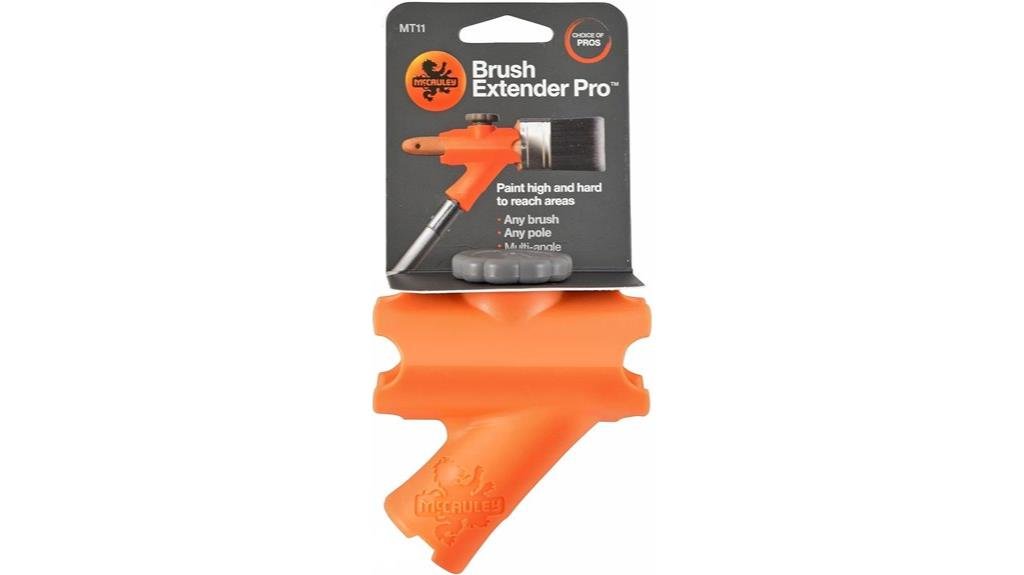
Are you tired of straining your back and neck while trying to paint high walls and ceilings? The McCauley Brush Extender Pro might be your solution. This innovative tool lets you paint hard-to-reach areas without a ladder, featuring a swivel head that securely grips most brush handles. Its polypropylene construction guarantees durability, and the large plastic screw with a flexible insert holds your brush firmly in place.
Compatible with standard 3/4 threaded poles, this extender accepts brush handles from 5/8 to 1 1/4 inches. While it’s great for painting corners between walls and ceilings, be aware of its plastic threading’s potential wear and limited angle adjustability.
Best For: Homeowners and DIY painters looking to paint high walls and ceilings without using a ladder.
Pros:
- Securely holds most brush sizes without damaging the handle
- Allows painting in hard-to-reach areas while standing on the ground
- Lightweight and made of durable polypropylene
Cons:
- Plastic threading prone to wear and stripping
- Limited angle adjustability
- Not compatible with all tool handle diameters
Multi-Angle Paint Brush Extender for High Ceiling and Painting Tools
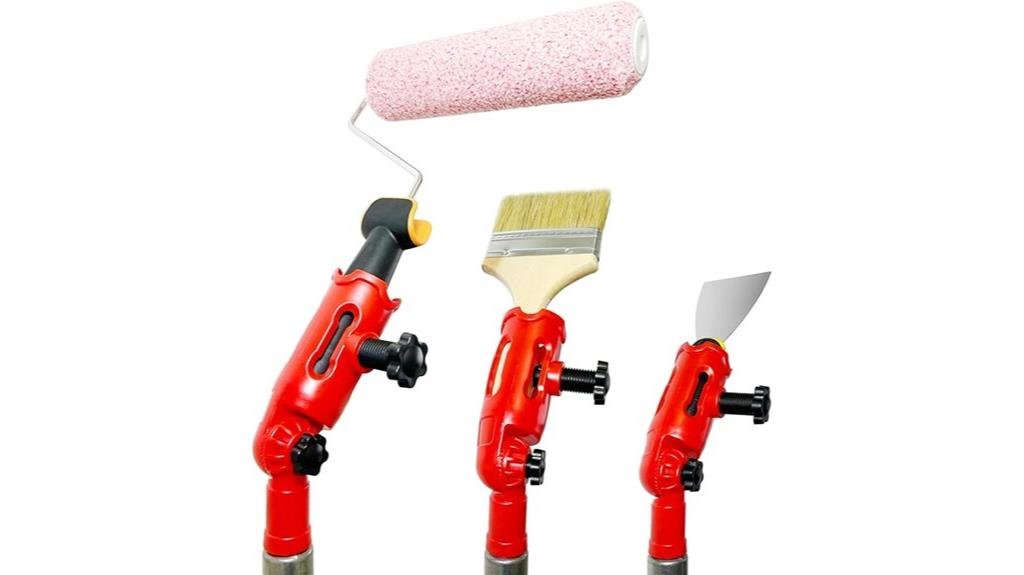
If you’re struggling to reach high ceilings or navigate tight corners while painting, the Multi-Angle Paint Brush Extender emerges as a game-changing solution. Its 180° rotation and dual brush head directions let you paint horizontally, vertically, and sideways with ease. The detachable brush adapter fits most roller and scraper sizes, making it a versatile tool for professional and DIY painters. You’ll appreciate its secure grip, bolt-locking mechanism, and compatibility with extension rods, offering a safer alternative to precarious ladders when tackling edges, corners, and hard-to-reach areas.
Best For: Painters, DIY enthusiasts, and homeowners looking to safely and easily paint high ceilings, corners, and hard-to-reach areas without using ladders.
Pros:
- 180° rotation allows painting in multiple directions
- Versatile adapter fits various brush and roller sizes
- Safer alternative to using ladders for high or tight spaces
Cons:
- Pole not included with the extender
- May require practice to master precise painting angles
- Limited to brush and roller painting applications
Factors to Consider When Choosing Paint Extender for Acrylic
When selecting a paint extender for acrylic, you’ll want to evaluate several critical factors that guarantee satisfactory performance. Your primary considerations should include brush size compatibility, angle adjustment range, material durability, safe reach height, and overall tool versatility. These key elements will help you choose an extender that matches your specific painting needs and enhances your painting efficiency.
Brush Size Compatibility
Most painters understand that brush size compatibility is a critical factor when selecting an acrylic paint extender. You’ll want an extender that can accommodate brushes from small detail tools to large wall brushes, ensuring versatility across your painting projects.
Look for extenders with secure, adaptable clamping mechanisms that can tightly grip brushes of varying diameters. An adjustable or universal brush adapter allows you to use a single extender with multiple brush sizes, maximizing your tool’s utility. Some extenders are designed for specific brush widths, so carefully consider the range of brushes you’ll need for your painting job.
Angle Adjustment Range
Selecting a paint extender with a robust angle adjustment range transforms your painting experience from challenging to comfortable. With an adjustable range of 160-180 degrees, you’ll easily navigate complex painting scenarios like tight corners, high ceilings, and intricate edges.
The pivoting and tilting capabilities of a quality paint extender enable you to maintain precise brush orientation and control. By allowing your brush head to rotate in multiple directions, you’ll achieve consistent paint application on angled and irregular surfaces. This flexibility means you can seamlessly switch between brushes, rollers, and scrapers without compromising your technique.
When choosing your paint extender, prioritize models that offer maximum angle adjustment, ensuring you can reach every challenging surface with professional-grade precision and ease.
Material Durability Matters
Because material durability can make or break your painting experience, choosing a paint extender crafted from high-quality materials becomes essential for professional and DIY artists alike. You’ll want to prioritize rigid materials like aluminum alloy, which offer superior strength and stability compared to lightweight plastics. Look for extenders with solid construction and minimal moving parts to reduce potential wear and loosening over time.
When evaluating durability, pay close attention to threaded pole attachments. These connection points should be sturdy enough to withstand repeated use without stripping or degrading. Careful maintenance can further extend your extender’s lifespan, but starting with a robust, well-constructed tool is your best defense against premature wear and potential painting interruptions.
Safety Reach Height
When evaluating paint extenders for acrylic projects, safety reach height emerges as a critical factor that can substantially influence your painting efficiency and personal safety. You’ll want to prioritize an extender that allows you to comfortably access heights between 8-12 feet without risking ladder-related accidents. OSHA guidelines recommend using extendable tools for overhead painting, especially at heights exceeding 6 feet.
Look for paint extenders offering 3-5 feet of additional reach, which typically covers standard ceiling heights. Models with 180-360 degree angle adjustments provide enhanced flexibility for maneuvering tight corners and edges. Opt for lightweight, sturdy designs that guarantee secure brush attachment, giving you maximum control and stability while working at elevated heights. Your safety and painting precision depend on selecting the right reach capability.
Tool Versatility Levels
Paint extenders with remarkable versatility can transform your acrylic painting experience, offering adaptable solutions for complex project requirements. You’ll want to prioritize tools that provide multi-angle rotation between 160-180 degrees, enabling you to paint at diverse orientations with precision and control.
Look for extenders that accommodate brush sizes from 1 to 3 inches, allowing seamless shifts between detailed and broad painting techniques. Detachable brush adapters are vital, as they let you quickly switch between brushes, rollers, and scrapers without interrupting your creative workflow.
Consider bolt-locking mechanisms over threaded connections for more stable attachment to extension poles. These features allow you to confidently reach high ceilings and challenging areas while maintaining optimal painting control and efficiency.
Weight and Handling
After exploring tool versatility, painters must navigate the equally important domain of weight and handling when selecting acrylic paint extenders. You’ll want an extender that’s lightweight yet sturdy, crafted from materials like aluminum or polypropylene to minimize arm fatigue during extended painting sessions. The right extender should feel balanced in your hand, reducing strain on your wrist and elbow.
Consider the extender’s length and weight carefully; it must support your paint brush or roller without becoming unwieldy. A secure attachment mechanism is vital, ensuring your grip remains firm and precise. By prioritizing these ergonomic factors, you’ll find an extender that not only extends your reach but also enhances your painting comfort and control, ultimately improving your artistic performance.