

While some artists struggle with flat, lifeless paintings, others reveal vibrant dimensions through strategic glazing techniques. You’ll uncover how the right medium can transform your acrylic work from ordinary to extraordinary. Professional painters know that glazing isn’t just about layering—it’s about creating depth, luminosity, and subtle color progressions. Curious about which mediums can elevate your artistic expression? Let’s explore the top choices that’ll revolutionize your painting approach.
DecoArt Americana Mediums Glazing Paint, 2-Ounce, 2 Fl Oz (Pack of 1)
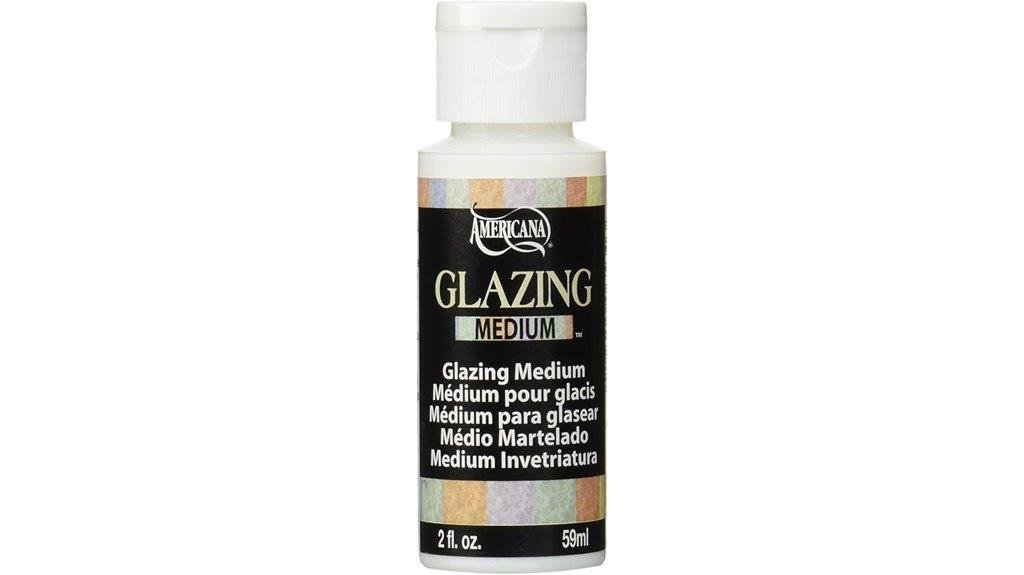
DecoArt Americana Mediums Glazing Paint is a versatile solution for artists and crafters seeking a reliable glazing medium. You’ll appreciate its compatibility with most acrylic and latex paints, allowing you to create unique tints and finishes. The medium dries permanently in just 15-20 minutes and offers easy soap and water clean-up. Whether you’re working on plaster of Paris ornaments, wood crafts, or mixed media projects, this non-toxic paint provides a smooth glazing experience. Its versatility shines through in various applications, from creating marbled effects to sealing decorative pieces, making it a go-to choice for creative professionals.
Best For: Crafters and artists looking for a versatile, easy-to-use glazing medium for acrylic and mixed media projects.
Pros:
- Compatible with most acrylic and latex paints
- Quick-drying (15-20 minutes)
- Non-toxic with easy soap and water clean-up
Cons:
- May remain tacky on some surfaces
- Limited color options
- Requires careful application to achieve desired effect
Golden Acrylic Medium, Glazing Liquid, 32 Oz, Satin
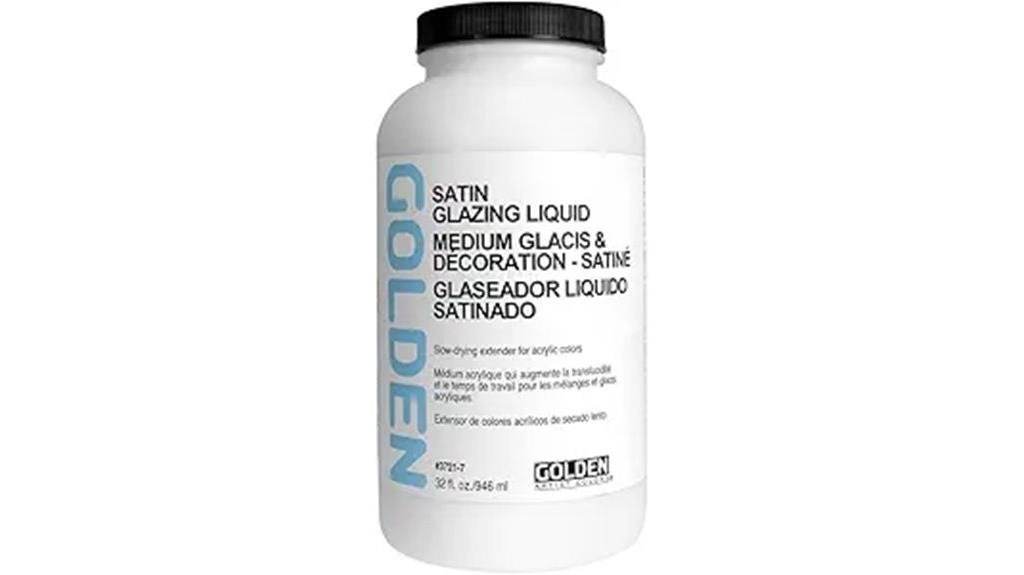
Artists seeking a versatile glazing medium will find Golden’s Acrylic Medium, Glazing Liquid in Satin an exceptional choice for creating subtle, translucent color layers. You’ll appreciate its longer working time, which allows for intricate blending and subtractive techniques. Whether you’re working on fine art or decorative painting projects, this 32-ounce medium offers professional-grade quality. It’s perfect for sealing painted canvases, thinning acrylic paint, and achieving sophisticated faux marble or granite wall effects. Made in the USA, this high-quality medium delivers outstanding value and precise application for artists demanding excellence.
Best For: Professional and serious artists seeking a high-quality, versatile acrylic glazing medium for fine art and decorative painting techniques.
Pros:
- Longer working time for intricate blending and subtractive techniques
- Versatile application for sealing, thinning, and creating translucent layers
- Professional-grade quality made in the USA
Cons:
- Limited to interior use only
- Satin finish may not suit all artistic preferences
- Relatively expensive compared to basic acrylic mediums
Nicpro Silicone Pouring Oil for Art Painting
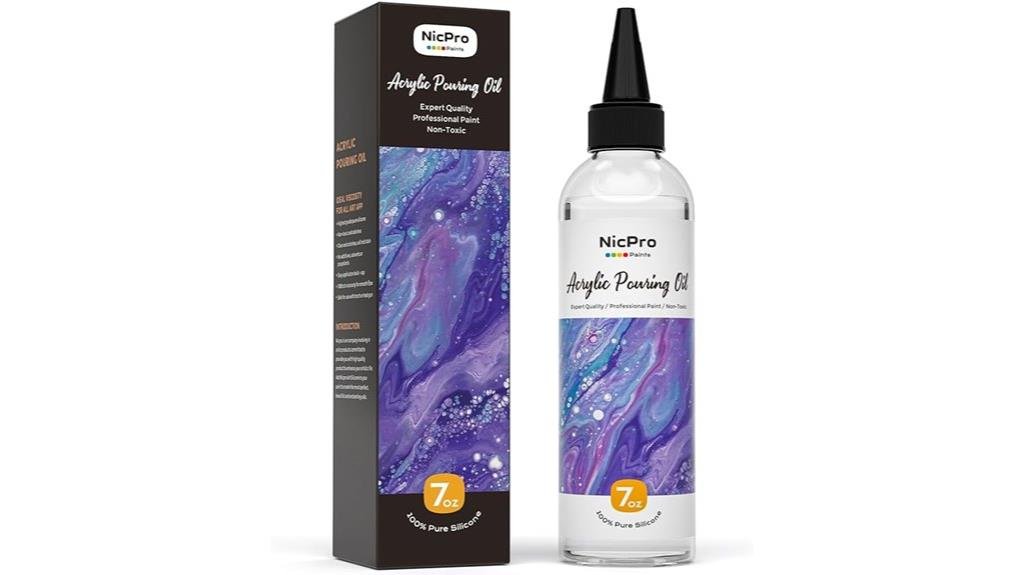
Painters seeking precise cell formation in their acrylic pour artworks will find the Nicpro Silicone Pouring Oil a game-changing solution. This 100% pure, colorless medium offers unparalleled control over painting techniques. You’ll appreciate its versatility, working seamlessly with all acrylic and watercolor paints. Just add one drop per 10 ml of pour paint to create stunning cell patterns and waves. The large, easy-squeeze bottle safeguards mess-free application, while its non-toxic, odorless formula guarantees a safe art experience. Whether you’re a professional or hobbyist, this silicone pouring oil will elevate your artistic expression with precision and ease.
Best For: Artists and painters seeking precise cell formation in acrylic and watercolor pour painting techniques.
Pros:
- 100% pure silicone with no additives
- Easy-to-use squeeze bottle with precision tip
- Compatible with multiple paint types and mediums
Cons:
- Requires careful measurement (1 drop per 10 ml)
- May be more expensive than alternative cell-creating methods
- Potential learning curve for beginners in pour painting techniques
Nicpro Acrylic Paint Pouring Medium (8.45oz / 250ml)
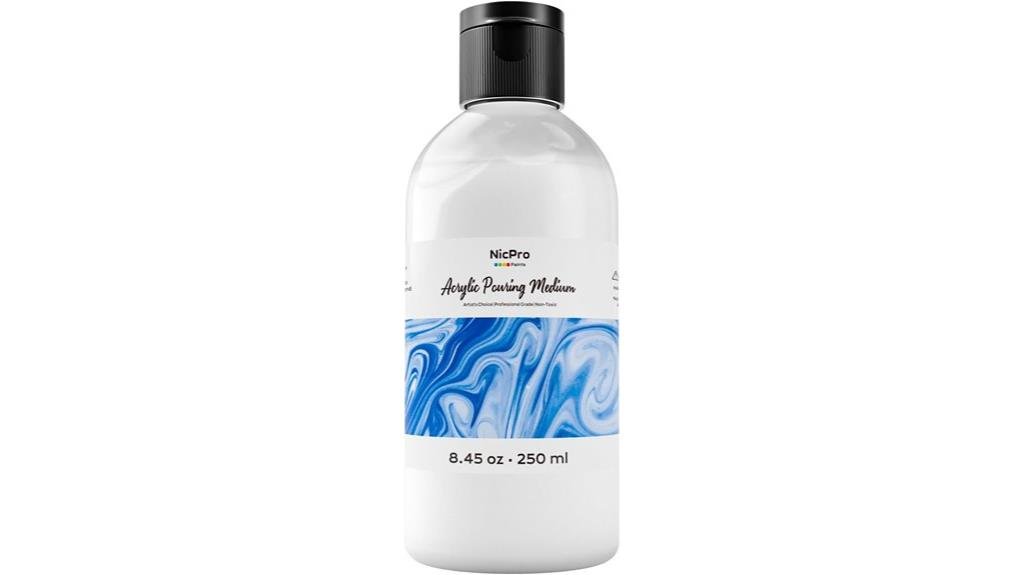
For artists seeking a versatile and high-quality pouring medium, the Nicpro Acrylic Paint Pouring Medium offers an exceptional solution for multiple creative projects. You’ll appreciate its ability to reduce paint viscosity and enhance flowability across various surfaces like canvas, wood, metal, and leather. Non-toxic and meeting quality standards, this medium prevents fading and cracking while improving paint transparency and smoothness. With its translucent liquid design, you’ll find it ideal for school practices, professional art, and craft enthusiasts looking to achieve professional-level pouring effects.
Best For: Artists, students, and craft enthusiasts seeking a high-quality, versatile acrylic pouring medium for multiple surface applications.
Pros:
- Non-toxic and meets ASTM D4236 and EN71 quality standards
- Improves paint flow and prevents fading and cracking
- Suitable for diverse surfaces including canvas, wood, metal, and leather
Cons:
- Limited bottle size at 8.45 oz / 250ml
- May require practice to perfect pouring techniques
- Slightly higher price point compared to basic paint mediums
Acrylic Medium for Painting, Semitransparent with Satin Finish
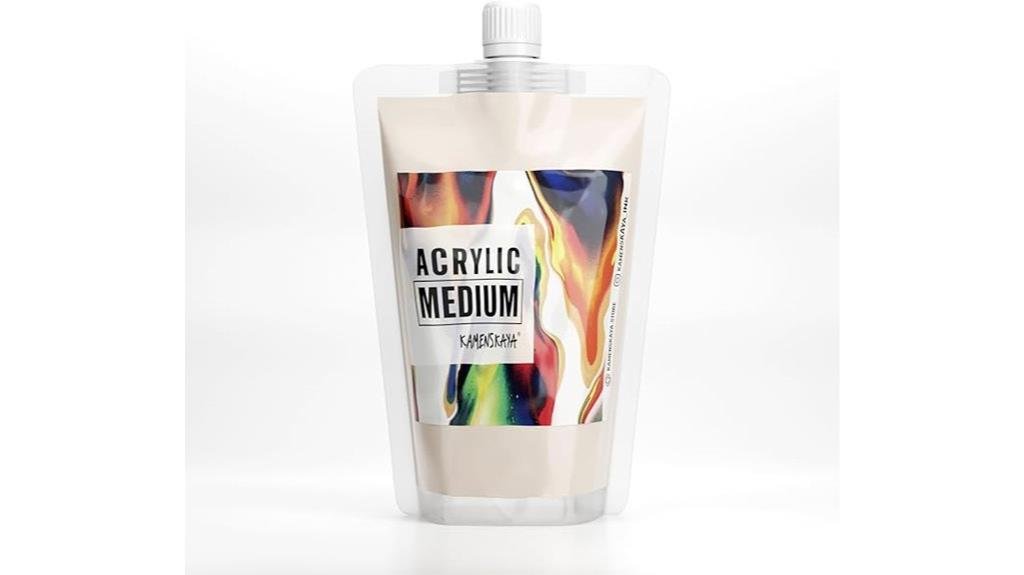
Creative professionals seeking a versatile acrylic medium will find the KAMENSKAYA semitransparent satin finish an exceptional solution for expanding their painting techniques. It’s perfect for blending acrylic inks and creating custom color shades with ease. You’ll appreciate its lightweight texture and excellent adhesive properties that work seamlessly on various surfaces like plastic, wood, metal, and glass. The medium’s water-resistant formula guarantees durability, while its neutral beige shade allows for flexible color mixing and application.
Best For: Professional and hobbyist artists who want a versatile, water-resistant acrylic medium for creating custom color shades on multiple surfaces.
Pros:
- Economical and allows mixing colors in any desired quantity
- Excellent adhesion on various surfaces including plastic, wood, and metal
- Lightweight texture with water-resistant and durable formula
Cons:
- Limited to semitransparent neutral beige shade
- Requires additional skill and practice for optimal color mixing
- May not be suitable for artists seeking fully opaque mediums
Factors to Consider When Selecting a Glazing Medium for Acrylic Painting
When selecting a glazing medium for your acrylic painting, you’ll want to evaluate several critical factors that impact your artistic results. You should assess the medium’s consistency and flow, its transparency and shine, drying time duration, how it interacts with colors, and its compatibility with different painting surfaces. By carefully considering these aspects, you’ll choose a medium that enhances your painting technique and achieves the visual effect you desire.
Consistency and Flow
Because glazing mediums play a pivotal role in acrylic painting techniques, understanding their consistency and flow properties is essential for artists seeking ideal results. The viscosity of your medium directly impacts how you’ll apply paint and create visual effects. A thinner medium allows for smoother blending and easier layering, enabling you to create translucent, delicate shifts between colors. Conversely, a thicker medium provides more control, helping you maintain precise brush strokes and texture.
When selecting a glazing medium, consider your specific artistic goals. Do you want soft, ethereal color shifts or more defined, structured applications? The medium’s flow properties will determine how easily you can spread and manipulate paint across your canvas, ultimately influencing the final appearance of your artwork.
Transparency and Shine
Building upon the understanding of consistency and flow, artists must now focus on the nuanced world of transparency and shine in glazing mediums. When selecting your medium, you’ll want to ponder how gloss, satin, or matte finishes will impact your painting’s visual depth. High-gloss mediums create a reflective, transparent layer that enhances underlying paint colors, while satin and matte options provide a softer, less lustrous appearance.
The transparency level of your chosen medium directly influences how much of the previous paint layer remains visible. By strategically layering different glazing mediums, you can create complex optical effects, add luminosity, and develop unique textural dimensions. Your careful selection will ultimately determine the painting’s final aesthetic, making transparency and shine critical components of your artistic expression.
Drying Time Duration
How quickly will your glazing medium transform your artistic vision? The drying time of your medium directly impacts your painting technique and creative expression. Fast-drying mediums (15-20 minutes) offer precision and control, allowing you to create distinct, crisp layers with minimal wait time. In contrast, slower mediums that take up to an hour to dry provide more flexibility for blending, softening borders, and developing atmospheric effects.
Your choice depends on your specific artistic goals. If you’re aiming for detailed work with sharp shifts, opt for a quick-drying medium. For more fluid, nuanced painting styles that require extensive blending, a slower-drying glazing medium will give you the open working time needed to achieve subtle color gradations and complex visual textures.
Color Interaction Quality
When selecting a glazing medium for acrylic painting, the quality of color interaction becomes a critical factor in achieving your artistic vision. You’ll want to choose a medium that allows seamless blending and transparent layering, enabling colors to interact naturally and create depth. The right glazing medium should help you maintain color vibrancy while providing subtle changes between pigments.
Consider how different mediums affect color transparency and intensity. Some mediums enhance color luminosity, while others might slightly subdue or alter the underlying paint’s appearance. A low-sheen medium can help preserve the subtle color nuances and prevent distracting reflections. Remember that the medium’s compatibility with your acrylic paints is essential for achieving smooth, harmonious color interactions that bring your artistic intentions to life.
Surface Compatibility Range
After exploring the nuanced color interactions of glazing mediums, artists must next consider the surface compatibility of their chosen medium. Your selection depends on understanding the specific characteristics of your painting surface, whether it’s canvas, wood, paper, or another material. Water-based glazing mediums offer greater versatility across different surfaces compared to oil-based alternatives.
Pay close attention to the medium’s composition, as ingredients like acrylic resins or silicone directly impact adhesion and durability. Some mediums are specially formulated for specific surfaces like glass or metal, ensuring ideal performance. Consider the surface’s porosity and texture when choosing a compatible glazing medium. By carefully matching the medium’s properties to your painting surface, you’ll achieve more professional and long-lasting results in your acrylic artwork.
Non-Toxic Safety Factors
Because safety should be a paramount concern for artists, selecting a non-toxic glazing medium requires careful consideration of potential health risks. You’ll want to prioritize products labeled non-toxic and compliant with recognized safety standards like ASTM D4236 or EN71. Avoid glazing mediums containing volatile organic compounds (VOCs) or those with strong, potentially harmful odors. Instead, opt for water-based options that offer easy soap and water clean-up, reducing exposure to dangerous chemicals. Verify the medium’s suitability for indoor use and guarantee it doesn’t present environmental or fire hazards. Compatibility with your acrylic paints is vital, so check that the glazing medium integrates seamlessly with your existing materials. By taking these precautions, you’ll create artwork safely and confidently.
Project Type Flexibility
Versatility becomes the artist’s compass when maneuvering the diverse landscape of acrylic painting techniques. You’ll want a glazing medium that adapts seamlessly across different project types, from fine art to decorative painting. Look for mediums that offer extended working times, enabling precise blending and control.
Consider the medium’s compatibility with various paint types and its ability to create different finish effects. A versatile glazing medium should work effortlessly with both acrylic and latex paints, providing flexibility for mixed-media creations. Pay attention to transparency levels, which determine how underlying layers will interact and appear.
When selecting your glazing medium, prioritize products that support multiple techniques—whether you’re creating subtle translucent layers or experimenting with dynamic pour painting effects. Your chosen medium should enhance, not limit, your artistic vision.