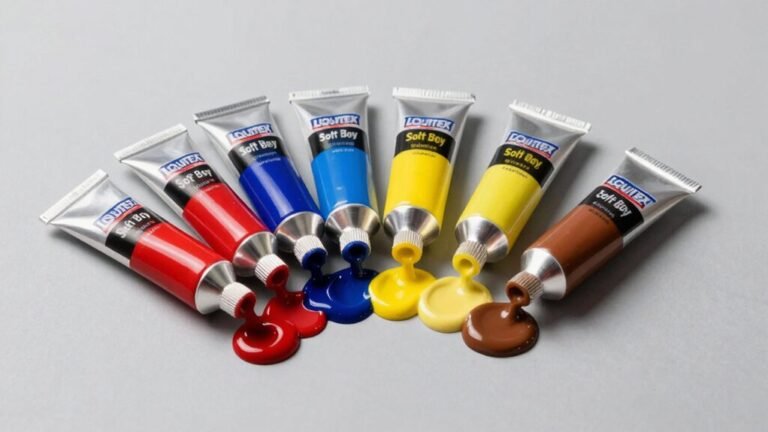

Did you know that over 60% of artists struggle with acrylic paint’s inherent thickness and uneven application? You’ll want to reveal the game-changing flow improvers that can transform your artistic experience. These specialized mediums aren’t just additives; they’re your secret weapon for achieving silky-smooth brushstrokes and professional-grade finishes. If you’re tired of streaky, clumpy paintings, you’re in the right place. Stick around to access the techniques that’ll elevate your artwork from amateur to extraordinary.
Vallejo – Airbrush Thinner for Acrylic Paints 200 ml. (6.76 fl.oz.)
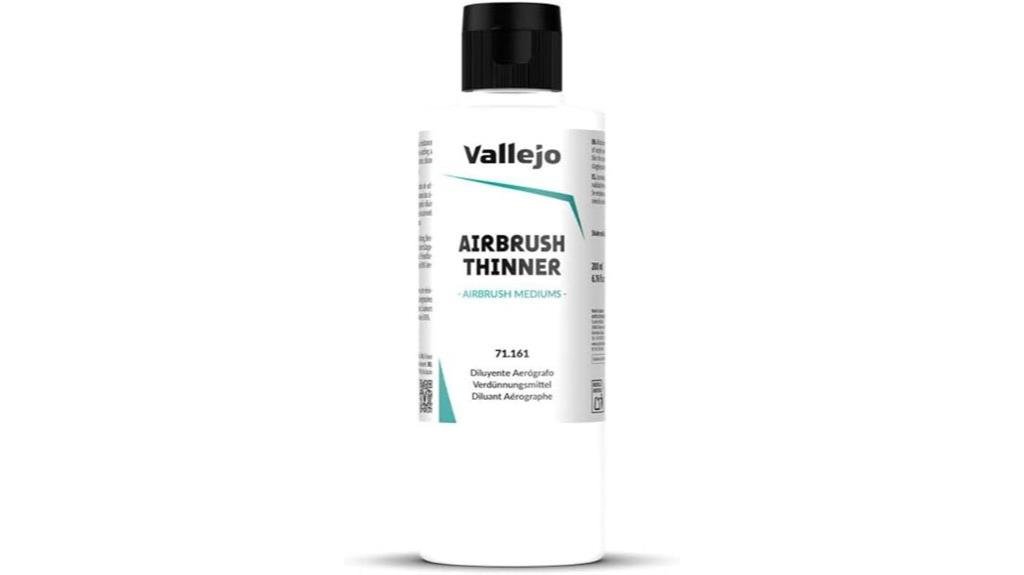
If you’re a painter seeking precision and professional-grade results, the Vallejo Airbrush Thinner stands out as a top-tier flow improver for acrylic paint. Specifically designed for airbrush and brush application, this thinner optimizes color fluidity without sacrificing paint adhesion or hardness. You’ll appreciate its ability to create uniform finishes, whether you’re working on detailed projects or broad surfaces. With recommended dilution rates of 25% for airbrush and 50% for brush techniques, it offers flexibility across various painting styles. Available in multiple sizes and packaged in an eco-friendly r-PET container, this highly-rated thinner guarantees smooth, professional-quality results.
Best For: Professional and hobbyist artists seeking high-precision airbrush and brush painting techniques with acrylic paints.
Pros:
- Optimizes paint fluidity without compromising paint quality
- Versatile for both airbrush and brush applications
- Eco-friendly packaging with recycled r-PET container
Cons:
- Limited to indoor use
- Specific to acrylic paint applications
- Requires precise dilution ratios for best results
GOLDEN High Flow Acrylic Medium (4 fl. oz.)
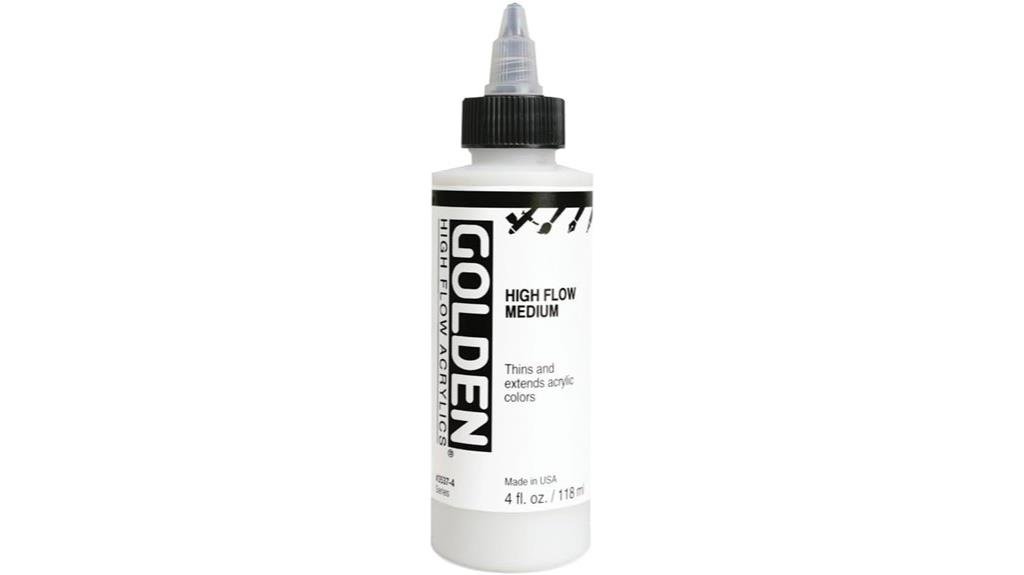
Artists seeking ultimate control over their acrylic paint’s flow and transparency will find the GOLDEN High Flow Acrylic Medium a game-changer. This professional-grade medium thins acrylics, enhancing flow and leveling with infinite precision. Whether you’re doing marble painting, pour art, or airbrush work, its versatility shines through. Made in the USA by an employee-owned company with 40+ years of experience, this transparent medium helps you achieve the perfect viscosity and surface sheen. Dries clear and works seamlessly with various color types, it’s a must-have for artists wanting to elevate their creative techniques.
Best For: Professional and experimental artists looking to manipulate acrylic paint’s flow, transparency, and viscosity across various techniques like marble painting, pour art, and airbrushing.
Pros:
- Provides infinite control over acrylic paint consistency
- Versatile for multiple art techniques and color types
- Made by a reputable, employee-owned company with decades of experience
Cons:
- Limited bottle size at 4 fl. oz.
- Might require practice to master precise application
- Potentially more expensive than generic acrylic mediums
Mont Marte Premium Acrylic Flow Medium 8.45oz (250ml)
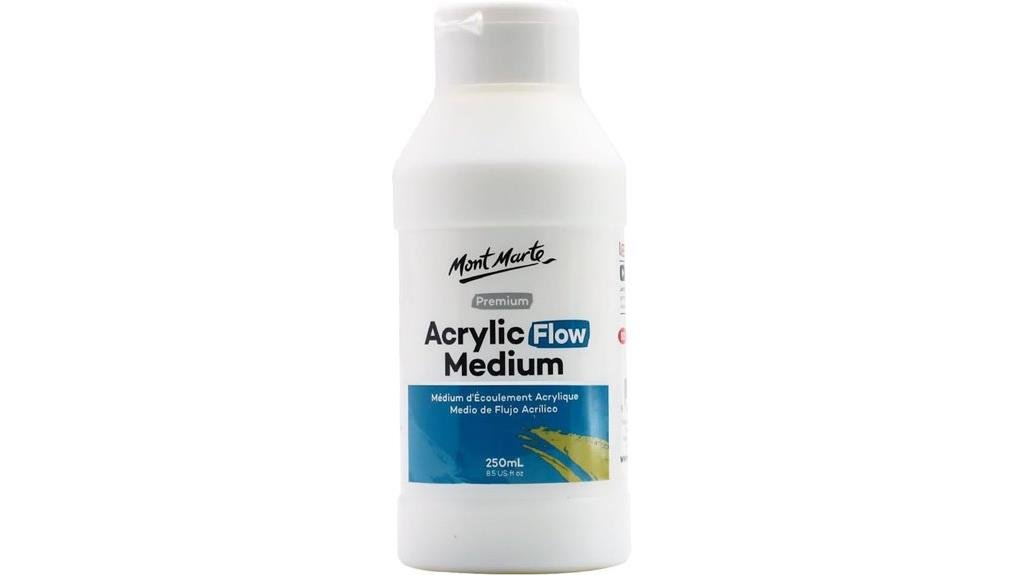
Painters seeking a versatile and high-quality flow improver will find the Mont Marte Premium Acrylic Flow Medium an excellent solution for enhancing their artwork. This non-toxic liquid medium increases paint translucency without compromising color intensity, making it perfect for fluid art techniques. You’ll appreciate its ability to thin acrylic paints smoothly and enhance paint flow across various surfaces. With its gloss finish and generous 8.45 fl oz bottle, it’s ideal for both interior and exterior projects. Whether you’re a professional artist or hobbyist, this medium offers the versatility you need to create stunning, fluid acrylic paintings.
Best For: Professional and hobby artists looking to create fluid art and enhance acrylic paint flow with a non-toxic, translucent medium.
Pros:
- Increases paint translucency without affecting color vibrancy
- Non-toxic and versatile for interior and exterior projects
- Smooth flow improver suitable for various artistic techniques
Cons:
- Limited coverage of 0.5 square meters per bottle
- Only available in a single size option
- Potentially higher price point compared to basic acrylic mediums
Flood Floetrol 1 qt. Clear Latex Paint Additive
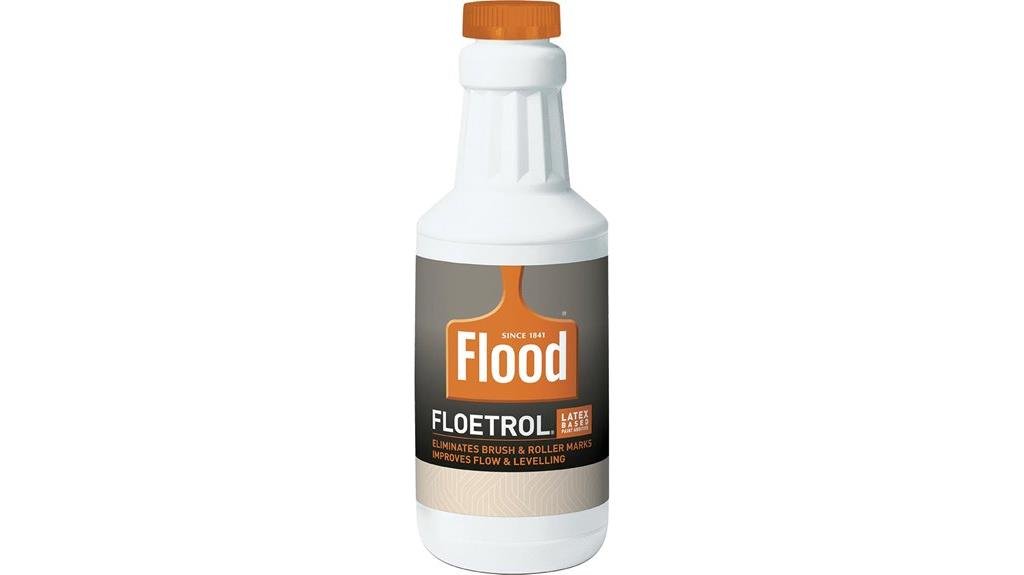
Professionals and hobbyists seeking a versatile flow improver will rapidly uncover that Flood Floetrol stands out as a game-changer for acrylic and latex paint projects. You’ll appreciate its ability to reduce brush marks, spray like oil-based paint, and provide an even finish across various surfaces. Whether you’re tackling walls, furniture, or art, this additive extends paint open time and improves consistency. Its mildew-resistant formula cleans easily with soap and water, while covering up to 300 sq. ft., making it a cost-effective solution for your creative endeavors.
Best For: DIY painters, artists, and professionals looking to improve paint application and finish quality across various surfaces.
Pros:
- Reduces brush marks and helps achieve a smoother paint finish
- Versatile for multiple projects including walls, furniture, and art
- Extends paint open time and improves overall paint consistency
Cons:
- Can become chunky if not shaken properly before use
- Potential shipping container leak issues
- May have higher cost for international customers
Micro-Mark Airbrush Flow Improver
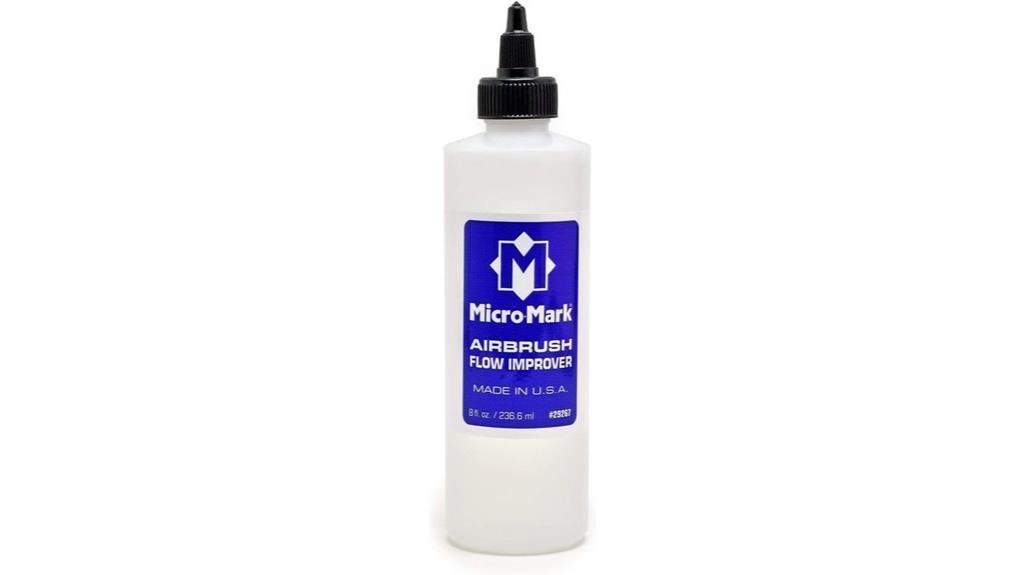
For airbrush enthusiasts seeking a reliable flow improver that tackles multiple painting challenges, the Micro-Mark Airbrush Flow Improver stands out as a top-tier solution. It’ll help you thin paint without losing color intensity, prevent nozzle clogs, and create smoother color shifts. Whether you’re working with water-based or solvent-based paints, this product guarantees consistent performance. Its ability to minimize tip dry and provide better control makes it ideal for achieving fine lines and detailed work. You’ll appreciate its versatility across different paint types and its long-lasting value.
Best For: Airbrush painters seeking a versatile flow improver that works with multiple paint types and provides smooth, consistent paint application.
Pros:
- Prevents airbrush nozzle clogging
- Maintains color intensity while thinning paint
- Enables smoother color transitions and finer details
Cons:
- Longer drying time compared to home-made solutions
- Limited information on product ingredients
- Potential performance variations with different paint brands
Factors to Consider When Choosing Flow Improver for Acrylic Paint
When selecting a flow improver for acrylic paint, you’ll want to carefully evaluate several critical factors that impact your painting performance. You should assess how the flow improver controls paint viscosity, enhances airbrush application, preserves color intensity, guarantees compatibility with your application surface, and manages drying time. These considerations will help you choose a flow improver that optimizes your painting technique and delivers professional-quality results.
Paint Viscosity Control
Every artist knows that mastering paint viscosity is crucial when working with acrylics, and selecting the right flow improver can make a significant difference in your artistic results. You’ll want to carefully consider your specific painting needs, as the essential viscosity depends on multiple factors like paint brand, pigment concentration, and application technique.
When controlling paint thickness, aim for a delicate balance. Adding too much flow improver can weaken paint adhesion and reduce opacity, while too little might leave you struggling with thick, uneven application. Your goal should be achieving a smooth, consistent paint flow that maintains the paint’s inherent structural integrity and color richness.
Experiment with small quantities, testing viscosity and performance to find your perfect paint-to-improver ratio.
Airbrush Performance Enhancement
Artists looking to level up their airbrush game must carefully consider several critical factors when selecting flow improvers for acrylic paint. You’ll want a product that reduces clogging and maintains consistent paint flow through your airbrush. The right flow improver can prevent tip dry-out and help you achieve finer lines and smoother shifts between shades.
When evaluating options, focus on how well the improver thins your paint without compromising color integrity. Look for formulations that minimize piston freeze-up and maintain ideal paint viscosity. Performance matters most, so choose a flow improver that enhances your control and precision during airbrushing. Your chosen product should seamlessly integrate with your acrylic paints, enabling more professional and detailed artwork with less technical frustration.
Color Intensity Preservation
Beyond airbrush performance, the true test of a superior flow improver lies in its ability to preserve the vibrant character of acrylic paint colors. When selecting a flow improver, you’ll want to prioritize products that maintain color saturation and opacity during the thinning process.
Not all flow enhancers are created equal. Some can inadvertently dilute pigments, leading to a disappointing loss of color intensity. The best flow improvers will optimize paint fluidity without compromising the richness and depth of your acrylic paints.
Look for mediums that allow you to thin your paint smoothly while retaining the original color strength. Your artistic vision depends on maintaining the vibrant, saturated hues that make your artwork truly compelling.
Application Surface Compatibility
Most painters overlook the critical relationship between flow improvers and painting surfaces, yet this compatibility can make or break your artistic outcome. When selecting a flow improver, you’ll want to carefully assess your surface’s characteristics. Different materials—canvas, wood, paper, or synthetic surfaces—interact uniquely with flow improvers, affecting paint adherence and final appearance.
Consider the surface’s texture and absorption rate. Smooth surfaces require different flow improver formulations compared to highly absorbent or textured materials. Some improvers work exceptionally well on specific surfaces, enhancing paint distribution and preventing unwanted pooling or streaking. Your choice directly impacts the painting’s durability, color intensity, and overall visual quality.
Always test your flow improver on a small surface area before committing to your entire project to guarantee suitable compatibility and performance.
Drying Time Management
After understanding surface compatibility, you’ll want to examine how flow improvers influence drying time—a key performance factor in acrylic painting. Different flow improvers can substantially accelerate or slow your paint’s drying process, giving you more control over your artistic workflow.
When selecting a flow improver, consider your specific project needs. Fast-drying formulas work best for layering techniques and tight deadlines, while slower-drying options provide extended blending time for complex color changes and detailed work. Some flow improvers contain glycerin or alcohol-based additives that directly impact drying speed.
Temperature and humidity also play pivotal roles in drying dynamics. Professional artists recommend testing flow improvers under various environmental conditions to understand their precise performance characteristics and adjust your technique accordingly.
Cost-Effectiveness Evaluation
Budget-conscious artists know that selecting the right flow improver isn’t just about performance—it’s also about smart financial strategy. You’ll want to compare the cost per volume and assess how many paint batches each product can treat before needing replacement.
Consider the versatility of your chosen flow improver across different paint types and applications. A product that works with multiple mediums can stretch your budget further. Don’t just focus on the upfront price; weigh the long-term value by calculating how frequently you’ll need to purchase the product.
While homemade alternatives might seem appealing, professional flow improvers often provide more consistent results. Your goal is finding the most cost-effective solution that doesn’t compromise your artistic quality or workflow efficiency.