
Imagine Sarah’s watercolor landscape fading within months of completion, its vibrant colors diminishing under harsh sunlight. You’ll want to protect your artwork from similar fate, and choosing the right acrylic varnish is essential. Professional artists know that preservation isn’t just about aesthetics—it’s about maintaining your creative legacy. What makes a varnish truly exceptional, and how can you guarantee your paintings remain pristine for decades to come?
Gloss Varnish for Acrylic Painting, 100ml Clear Varnish for Art Protection
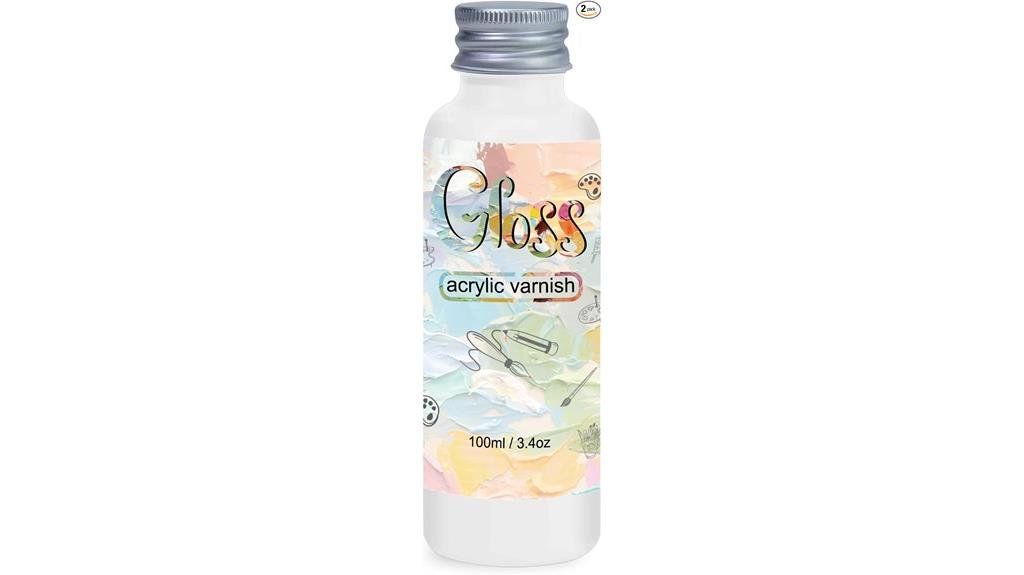
Are you an artist seeking ultimate protection for your acrylic masterpieces? The EIGTWEN 100ml Gloss Varnish is your go-to solution. This non-toxic sealer prevents yellowing and cracking while maintaining your artwork’s vibrant colors. With its glossy protective film, it’s perfect for acrylics, oils, and drawings. Simply apply the varnish after your painting is completely dry and wait three hours for thorough drying. Trusted by artists with a 4.5-star rating, this versatile varnish guarantees your art remains pristine and professionally preserved.
Best For: Artists seeking a high-quality, non-toxic protective varnish for preserving acrylic, oil, and mixed media artworks.
Pros:
- Prevents yellowing and cracking of artwork
- Non-toxic and safe for artists
- Versatile application across different art mediums
Cons:
- Requires 3-hour drying time
- Limited to 100ml volume
- Potential additional cost for art preservation
U.S. Art Supply Professional High Gloss Varnish for Acrylic Paintings
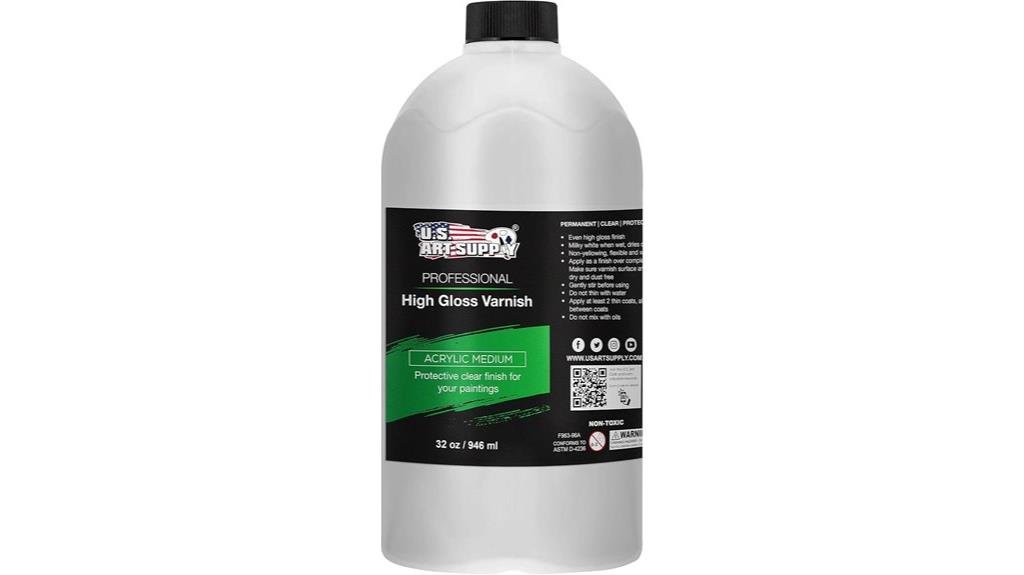
Artists seeking a robust, professional-grade varnish for their acrylic paintings will find the U.S. Art Supply Professional High Gloss Varnish an excellent choice. This 32-ounce bottle offers a clear, permanent protective finish that guards against UV damage and provides a glossy, non-yellowing surface. You’ll appreciate its water-resistant properties and versatility for both interior and exterior projects. The non-toxic formula meets safety standards, and its application is straightforward—simply apply two coats over completely dry acrylic paint. With impressive coverage and professional-quality protection, this varnish guarantees your artwork remains vibrant and well-preserved for years to come.
Best For: Professional and hobbyist artists looking to protect and enhance their acrylic paintings with a high-quality, non-yellowing varnish.
Pros:
- UV-resistant and water-resistant protective finish
- Non-toxic and meets safety standards (ASTM D4236)
- Suitable for both interior and exterior use
Cons:
- Requires minimum of 2 coats for optimal protection
- Manufactured in China, which may concern some buyers
- Slightly higher price point compared to basic varnish options
Breathing Color Timeless Archival Print Varnish, 1 Gallon Glossy Finish
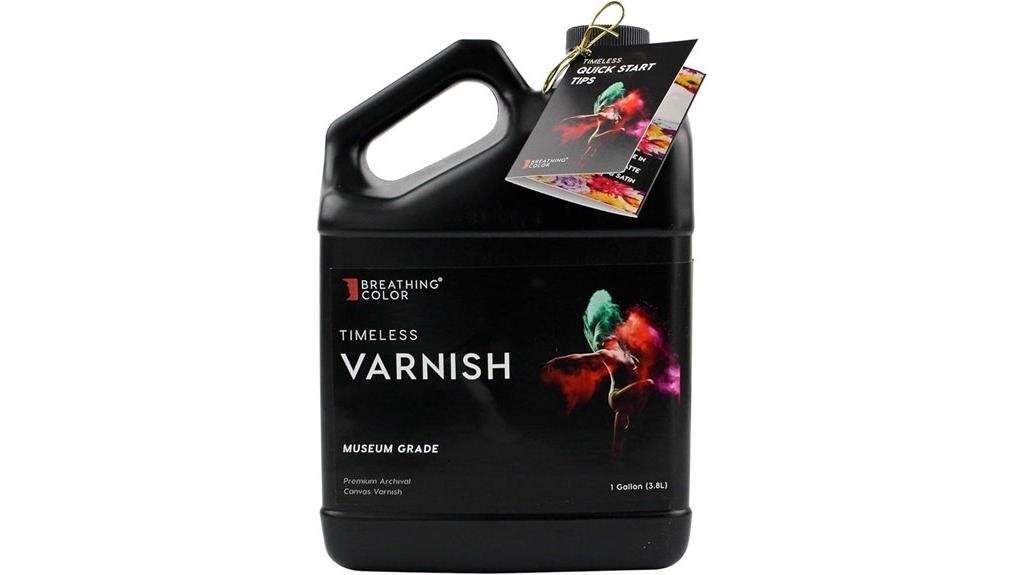
Professional photographers and fine art printmakers seeking top-tier protection for their prints will find the Breathing Color Timeless Archival Print Varnish an exceptional solution. This water-based coating offers thorough defense with water resistance, scuff protection, and UV defense. You’ll appreciate its easy application using a foam roller or HVLP sprayer, and clean-up is a breeze with warm water. With a glossy finish and impressive 22-gloss rating on Lyve Canvas, this varnish meets Breathing Color’s meticulous standards, ensuring your artwork remains pristine and professionally preserved.
Best For: Professional photographers and fine art printmakers who need high-quality, water-based archival print protection with easy application and professional results.
Pros:
- Provides comprehensive print protection with water resistance, scuff protection, and UV defense
- Easy to apply using foam roller or HVLP sprayer, with simple clean-up using warm water
- Meets meticulous Breathing Color standards with a 22-gloss rating on Lyve Canvas
Cons:
- Limited to interior use only
- Requires specific storage conditions (72°F ± 5°F / 35-65% Relative Humidity)
- May require additional investment in recommended Timeless Roller Kit for optimal application
Winsor & Newton Galeria Acrylic Gloss Varnish, 2.5-oz (75ml) Jar
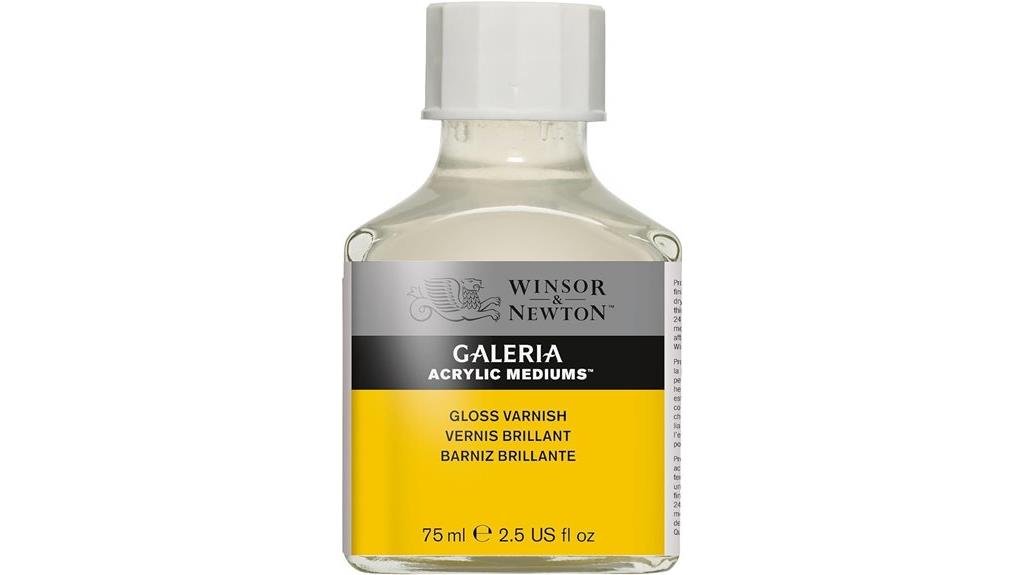
Crafted for artists seeking a versatile and protective finish, the Winsor & Newton Galeria Acrylic Gloss Varnish delivers a unique removable gloss that can enhance and safeguard your artwork. Its medium coverage and interior-friendly formula make it ideal for preserving paintings and models. You’ll appreciate its flexibility—mix it with the Matt Varnish to customize your desired sheen. With an impressive 4.6-star rating from over 8,500 customers, this French-made varnish offers professional-grade protection in a compact 2.5-oz jar that’s easy to apply and store.
Best For: Professional and amateur artists looking to protect and enhance their acrylic artwork with a customizable gloss finish.
Pros:
- Removable and mixable with matte varnish for custom sheen
- Versatile application for paintings and models
- Compact 2.5-oz jar with professional-grade protection
Cons:
- Some concerns about label quality
- Limited to interior use
- May require multiple coats for complete coverage
Sculpd Clear Varnish for Air Dry Clay Pottery (70ml)
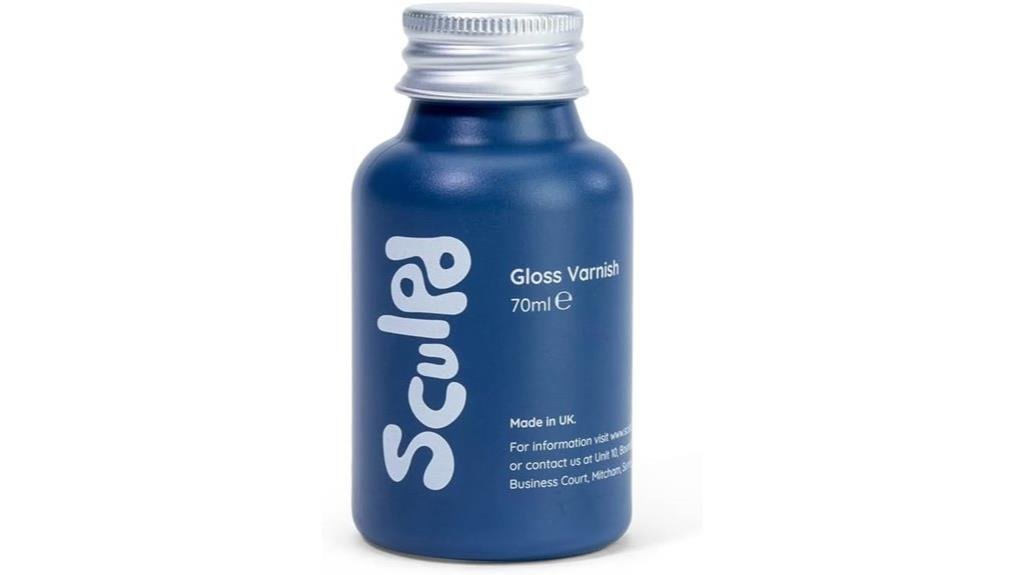
Hobbyists working with air-dry clay will find the Sculpd Clear Varnish a game-changer for protecting and enhancing their pottery projects. This waterproof, scratch-resistant matte varnish creates functional pottery without a kiln. Its self-leveling formula dries quickly in 5-10 minutes, making it ideal for small crafts. Apply two coats of white acrylic base coat, followed by two coats of gloss varnish, and let it dry overnight for a durable finish. While cost-effective for smaller projects, be aware of potential paint peeling and avoid food-safe or dishwasher applications.
Best For: Hobbyists and crafters looking to add a protective, glossy finish to small air-dry clay pottery projects.
Pros:
- Quick-drying, self-leveling formula
- Waterproof and scratch-resistant
- Compatible with multiple decorative materials like glitter and mica
Cons:
- Potential paint peeling issues
- Not suitable for food-safe or dishwasher applications
- More expensive for larger projects
Key Factors to Consider When Selecting Acrylic Varnish for Paintings
When choosing an acrylic varnish for your paintings, you’ll want to evaluate several critical factors that can impact the final appearance and longevity of your artwork. Key considerations include the varnish’s durability and protective qualities, available finish types (like gloss, satin, or matte), and its ease of application. Additionally, you should assess the chemical composition for safety, check its UV resistance level, and guarantee it complements your specific artistic needs and preservation goals.
Durability and Protection
As an artist, you’ll want an acrylic varnish that offers robust protection for your paintings. High-quality varnishes shield your artwork from potential damage caused by UV rays, dust, moisture, and physical wear. Look for non-yellowing formulations that maintain your painting’s original color vibrancy and clarity.
Museum-quality and archival-rated varnishes provide the most exhaustive protection, creating a durable barrier that preserves your artistic work for years. When selecting a varnish, consider its ability to form a clear, smooth protective film that doesn’t detract from your painting’s appearance. Whether you prefer a glossy or matte finish, the right varnish will enhance and safeguard your artwork’s longevity and visual integrity.
Finish Type Options
The world of acrylic varnishes offers artists a spectrum of finish types that can dramatically transform a painting’s final appearance. You’ll find three primary options: gloss, satin, and matte, each delivering a unique visual effect.
Gloss varnish creates a highly reflective surface that intensifies color depth and vibrancy, making your artwork pop with brilliant shine. Satin varnish provides a softer alternative, offering a subtle, velvet-like sheen that’s less intense than gloss but more refined than matte. Matte varnish delivers a completely non-reflective finish, ideal for reducing surface glare and creating a more understated presentation.
Your choice depends on your artistic vision, the painting’s subject, and the aesthetic you want to achieve. Consider how each finish will complement your work’s visual impact.
Application Method Ease
After selecting the perfect finish type for your artwork, you’ll want to ponder how easily you can apply the varnish. Brush-on varnishes typically offer the most straightforward application, especially for artists seeking a smooth, even coating. Look for formulas with lower viscosity, which spread more uniformly across your canvas and minimize visible brush strokes.
If you’re working on larger pieces, consider varnishes designed for roller application, which can provide efficient coverage. Some advanced varnishes include additives like silicones that enhance flow and leveling, making your application process more streamlined. While spray varnishes exist, they often require more skill to achieve a consistent result.
Your chosen varnish’s application method can considerably impact the final appearance of your painting, so choose wisely.
Chemical Composition Safety
While protecting your artwork matters, understanding the chemical composition of acrylic varnishes is essential for safeguarding both your health and artistic creation. You’ll want to prioritize water-based acrylic varnishes that are non-toxic and low in volatile organic compounds (VOCs). Look for products that conform to ASTM D4236 safety standards and avoid those containing formaldehyde, ammonia, or heavy metals.
When selecting a varnish, consider your personal sensitivity and the environment where the artwork will be displayed. Matte and satin finishes typically offer lower toxicity compared to high-gloss options. By carefully examining the chemical composition, you can choose a varnish that not only protects your painting but also guarantees a safer working environment for yourself and potential viewers.
UV Resistance Level
How critical is UV protection when safeguarding your acrylic paintings? Incredibly important, as UV light can rapidly degrade your artwork’s color and vibrancy. When selecting an acrylic varnish, you’ll want to prioritize products with high UV resistance ratings to prevent fading and color shifts.
Most manufacturers now specify their varnish’s UV protection levels, ranging from low to very high. By choosing a varnish with superior UV blocking capabilities, you’ll considerably extend your painting’s longevity. Look for detailed UV resistance specifications on product labels, which indicate the level of protection against harmful light exposure.
The best acrylic varnishes offer robust UV shielding, ensuring your artwork remains as vibrant and pristine as the day you completed it. Invest wisely in UV-protective varnishes to preserve your artistic investment.
Artwork Surface Compatibility
Protecting your artwork from UV damage is just the start of preserving your painting’s integrity. When selecting an acrylic varnish, you’ll need to take into account the specific surface compatibility of your artwork. Different painting mediums—canvas, paper, or wood—require unique varnish formulations that won’t chemically react or cause damage.
If you’re working with oil or acrylic paintings, choose a varnish designed specifically for your medium to prevent potential incompatibility issues. Textured or highly absorbent surfaces demand a varnish with higher viscosity to guarantee even application and complete coverage.
Your ideal varnish should create a uniform, non-yellowing protective layer that enhances and safeguards your artwork without compromising its original appearance or texture. Carefully match the varnish to your painting’s unique characteristics for ideal preservation.
Price and Value
Because budget considerations play an essential role in selecting the right acrylic varnish, artists must carefully evaluate the price-to-performance ratio of their chosen product. While varnish prices can range from a few dollars to over $100, mid-range options typically cost $10-$30 for 8-16 oz.
When comparing options, look beyond the initial price tag. Consider factors like brand reputation, specialty features, and volume discounts. Cheaper varnishes might compromise quality, whereas high-end products offer superior protection but can be expensive. To guarantee value, purchase the appropriate bottle size for your project and calculate the cost per ounce.
Ultimately, a strategic approach to selecting acrylic varnish will protect your artwork without overspending.