
You’re standing at the crossroads of artistic potential, wondering how to elevate your acrylic painting skills. The right book can reveal techniques that transform amateur brushstrokes into professional masterpieces. Whether you’re a beginner seeking fundamental guidance or an experienced artist craving advanced methods, these top five painting resources promise to revolutionize your creative journey. Are you ready to uncover the secrets that will redefine your artistic expression?
Compendium of Acrylic Painting Techniques
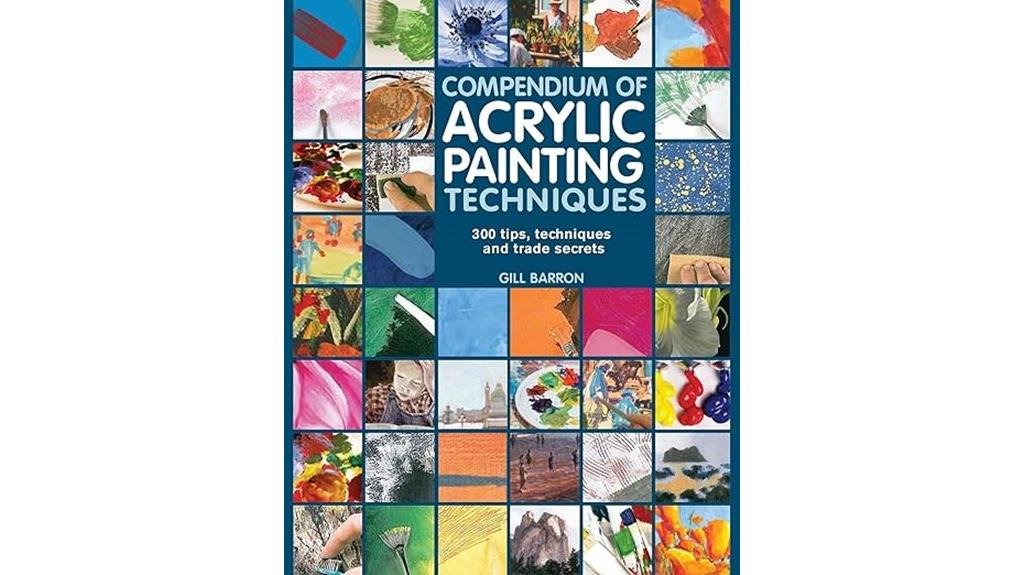
If you’re an artist seeking a thorough guide to acrylic painting techniques, this compendium offers an unparalleled resource with over 300 detailed methods. You’ll uncover everything from creating a stay-wet palette to mixing complex flesh tones and traversing potential challenges like mold in your paints. The book covers diverse techniques including one-stroke painting, dry brushing, and impasto, providing extensive insights for both beginners and experienced painters looking to expand their artistic skills and experiment with new approaches.
Best For: Artists of all skill levels seeking a comprehensive guide to acrylic painting techniques and methods.
Pros:
- Covers over 300 acrylic painting techniques with detailed explanations
- Suitable for both beginners and experienced painters
- Encourages creative exploration and experimentation
Cons:
- May be overwhelming for absolute beginners
- Could have more advanced techniques for professional artists
- Potentially too dense for casual hobbyists
HG Art Concepts Painters Color Diary (9×12 Spiral-Bound Color Swatch Book)
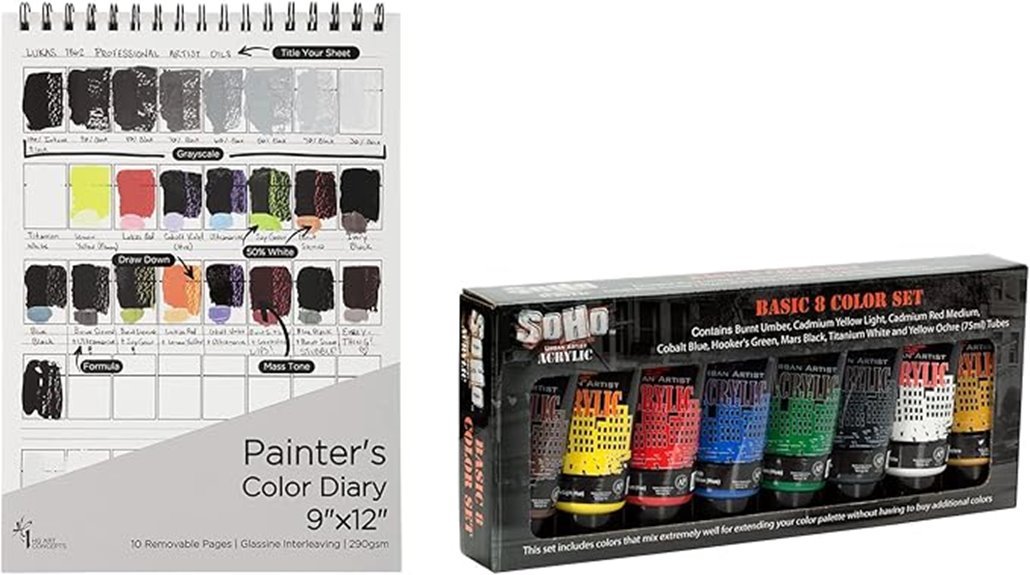
Artists seeking a thorough tool for color exploration will find the HG Art Concepts Painters Color Diary an indispensable companion, since it offers a systematic approach to documenting and experimenting with color mixtures. With 40 swatch boxes per page and glassine interleaving, you’ll capture precise color formulas, transparency levels, and value variations. The 9×12 spiral-bound design with 136 lb. canvas-textured paper makes it perfect for oil and acrylic painters. Whether you’re a student or professional, this color swatch book will help you organize your color palette and track your creative journey with unparalleled precision.
Best For: Artists and painters of all levels looking for a systematic and portable color mixing and documentation tool.
Pros:
- Comprehensive with 40 swatch boxes per page and glassine interleaving
- High-quality 136 lb. canvas-textured paper suitable for oil and acrylic paints
- Removable pages allow for flexible color tracking and reference
Cons:
- Limited to 10 removable pages
- Only available exclusively through Jerry’s Artarama
- Relatively specialized product with a specific use case
Paint Pouring: Mastering Fluid Art
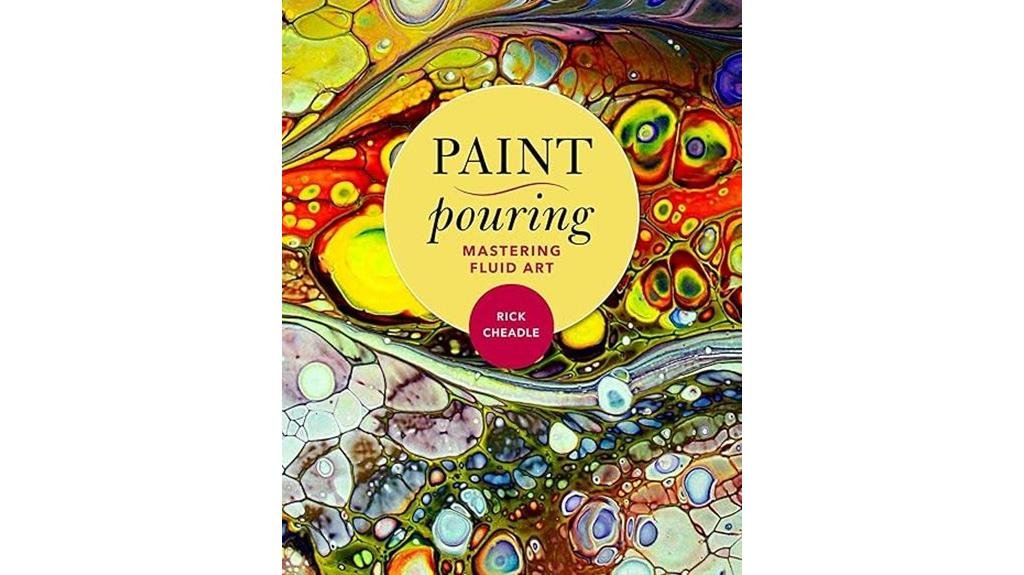
Paint pouring opens up a vibrant world of creativity for aspiring and seasoned artists seeking fluid, unpredictable art techniques. This book offers extensive guidance, from recommended supplies to paint recipes and technique ratios. You’ll learn how to master fluid art, with clear photos and easy-to-follow instructions that make complex methods accessible. Whether you’re a beginner or an experienced artist, you’ll uncover insights on drying, storing, protecting, and even selling your artwork. The resource provides more depth than YouTube tutorials, helping you develop a solid understanding of paint pouring principles and techniques.
Best For: Beginners and intermediate artists looking to learn and improve fluid art painting techniques.
Pros:
- Comprehensive guide with clear instructions and photos
- Covers wide range of techniques and practical advice
- Includes information on supplies, recipes, and artwork preservation
Cons:
- Lacks detailed troubleshooting guidance
- Some redundancy with author’s other books
- May not provide advanced insights for experienced artists
Lee Hammonds Big Book of Acrylic Painting Guide
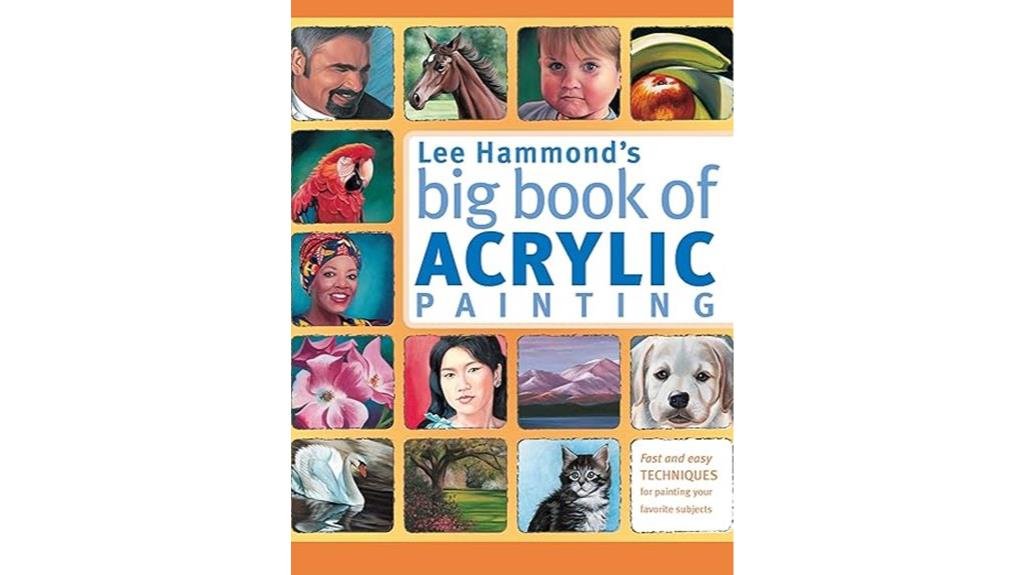
Beginner acrylic painters looking to kick-start their artistic journey will find Lee Hammonds Big Book of Acrylic Painting Guide an indispensable resource that breaks down complex painting techniques into digestible, easy-to-follow steps. The book offers all-encompassing guidance across various subjects like still life, landscapes, and portraits, helping you move from novice to skilled artist. With clear illustrations and a step-by-step approach, you’ll learn both fundamental and advanced techniques. Though some lessons might feel basic, the book’s well-structured content and helpful tips make it a valuable reference tool for those starting their acrylic painting adventure.
Best For: Beginner acrylic painters seeking a comprehensive, easy-to-follow guide to learning painting techniques and improving their skills.
Pros:
- Clear, step-by-step instructions that break down complex techniques
- Covers a wide range of subjects including still life, landscapes, and portraits
- Well-structured content with helpful illustrations and tips
Cons:
- Some lessons may feel too basic for more advanced painters
- Color reproduction in the book may not perfectly match examples
- Limited depth for those looking for highly advanced techniques
Coogam Water Coloring Busy Book for Kids’ Learning and Drawing
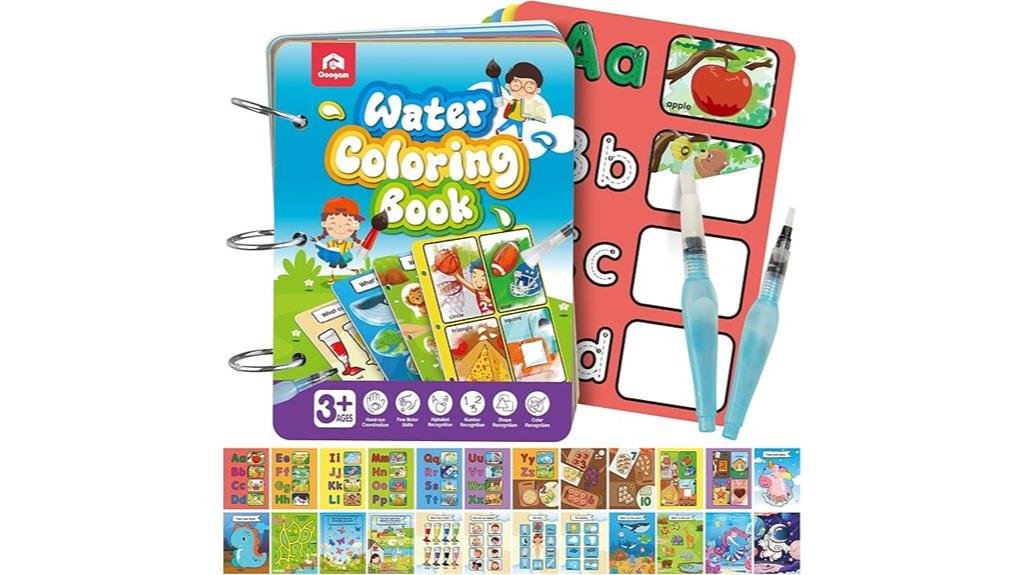
Young learners will uncover a vibrant world of interactive education with the Coogam Water Coloring Busy Book, designed specifically for children ages 3-5. You’ll find 12 double-sided pages covering alphabet, numbers, shapes, animals, colors, and weather. The book’s water-resistant lamination and metal rings guarantee durability, while two water pens allow mess-free creativity. With directional arrows guiding proper writing techniques and blank spaces for imaginative painting, you’ll help develop your child’s cognitive skills and reading abilities. It’s a portable learning tool perfect for classrooms, homeschooling, and on-the-go entertainment.
Best For: Preschool and kindergarten-aged children looking for an engaging, educational, and portable learning activity.
Pros:
- Reusable and mess-free water coloring book that supports early learning skills
- Covers multiple educational topics like alphabet, numbers, and shapes
- Includes two water pens and a convenient storage bag for easy transport
Cons:
- Limited to a specific age range (3-5 years old)
- Requires water pens to function
- May have limited long-term use as children’s skills advance
Key Factors to Consider When Choosing Books on Painting With Acrylics
When selecting a book on acrylic painting, you’ll want to guarantee it matches your skill level and provides thorough techniques. Look for resources that showcase an author’s teaching expertise, offer robust visual learning support, and include practical projects that guide your artistic development. These key factors will help you find a painting book that genuinely augments your acrylic painting skills and keeps you motivated to learn.
Skill Level Compatibility
While selecting the right book for learning acrylic painting, artists must carefully consider their current skill level to guarantee the resource matches their specific learning needs. Beginners should seek extensive guides that break down fundamental techniques into digestible, step-by-step instructions, helping them build a solid foundation. Intermediate painters will benefit from books exploring diverse styles and more complex application methods that challenge their existing skills. Advanced artists might want resources that push artistic boundaries and introduce innovative techniques to expand their creative repertoire.
The ideal book adapts to your skill progression, offering content that’s simultaneously accessible and challenging. Look for volumes that provide graduated learning pathways, allowing you to grow from basic principles to more sophisticated artistic expressions without feeling overwhelmed or underwhelmed by the material’s complexity.
Comprehensive Technique Coverage
Once you’ve identified a book that matches your skill level, the next critical consideration is its exhaustive technique coverage. Look for guides that extensively explore fundamental acrylic painting techniques like color mixing, blending, layering, and specialized applications. The best books will provide step-by-step visual demonstrations that help you master dry brushing, impasto, and wet-on-wet methods.
Seek resources that offer detailed troubleshooting advice for common painting challenges, such as managing quick-drying paint or achieving specific visual effects. Ideal technique books strike a delicate balance between thorough explanations and encouraging creative experimentation. They shouldn’t just teach techniques mechanically, but inspire you to develop your unique artistic voice while building a solid technical foundation in acrylic painting.
Author’s Teaching Expertise
How can you determine an author’s teaching expertise when selecting an acrylic painting book? Look for indicators that showcase their ability to effectively communicate painting techniques. An author’s years of experience in acrylics, formal art education, and teaching background are vital markers of their instructional skills. Pay attention to whether they’ve published multiple works on the medium, which suggests expansive knowledge.
Reader testimonials can provide insight into the author’s clarity and ease of instruction. Additionally, seek out authors recognized in the art community through awards or professional features. These credentials signal credibility and depth of understanding. By carefully evaluating these factors, you’ll find a book that not only teaches techniques but does so in a way that resonates with your learning style.
Visual Learning Support
The effectiveness of an acrylic painting book hinges critically on its visual learning support. When you’re searching for the right instructional resource, look for books that offer clear, high-quality illustrations and step-by-step imagery that break down complex techniques. These visual references aren’t just decorative—they’re essential tools that help you understand color application, brush techniques, and painting processes.
Quality books will showcase color swatches, demonstrate palette organization, and provide before-and-after examples that illuminate painting methods. The strategic placement of graphics and photographs can dramatically improve your comprehension and skill retention. Seek out texts where visuals are seamlessly integrated with instructional content, creating an engaging and accessible learning experience that transforms your artistic capabilities.
Practical Project Approach
While exploring acrylic painting resources, selecting books with a practical project approach can substantially accelerate your learning journey. Look for guides that offer step-by-step instructions and progressively challenging projects, allowing you to build skills systematically. The best books will include diverse subject matter like landscapes, portraits, and still lifes, giving you multiple opportunities to practice different techniques.
Aim for resources that start with simple projects and gradually increase in complexity, helping you develop confidence and technical proficiency. Seek out books that not only demonstrate painting methods but also provide troubleshooting tips for common challenges you’ll encounter. Visual demonstrations through clear photographs or illustrations can make instructions more accessible, helping you understand and implement techniques more effectively.
Technical Depth Range
Beyond selecting project-oriented resources, painters must carefully evaluate the technical depth range of acrylic painting books to match their individual learning needs. Your skill level and artistic goals will determine the most suitable book for your journey.
Beginner-focused books typically provide foundational techniques, offering clear step-by-step demonstrations and core principles. These resources help you build confidence and understand fundamental acrylic painting approaches. In contrast, intermediate and advanced books challenge you with innovative applications, experimental techniques, and unconventional styles that push artistic boundaries.
When choosing an acrylic painting book, assess your current abilities and desired skill progression. Select a resource that stretches your capabilities without overwhelming you, ensuring a meaningful and progressive learning experience that aligns with your artistic development.
Budget-Friendly Resources
Budget constraints needn’t limit your artistic exploration when learning acrylic painting techniques. You’ll find numerous affordable resources to enhance your skills without breaking the bank. Local libraries offer free painting books, while online platforms like YouTube provide expansive free tutorials and technique demonstrations. Art supply stores and online retailers frequently sell discounted or used instructional books for under $20, making learning accessible to everyone.
Consider joining artist communities and forums where members share valuable learning materials and low-cost painting guides. These networks can connect you with experienced artists and budget-friendly resources that’ll help you develop your acrylic painting skills. By being strategic and resourceful, you can build an extensive learning collection without spending a fortune.
Creative Inspiration Elements
How can you transform a basic acrylic painting book into a wellspring of creative inspiration? Look for resources that showcase diverse painting styles and techniques, offering visual demonstrations of advanced methods like impasto and dry brushing. Seek out books by experienced artists with decades of expertise, as their insights can fuel your artistic growth and push your creative boundaries.
The most transformative books will highlight unique color mixing approaches, detailed flesh tone blending techniques, and innovative painting applications beyond traditional canvases. Choose volumes that feature stunning visual examples of painting on unconventional surfaces like glass or wood. These elements will spark new ideas, challenge your current skills, and encourage you to experiment boldly with acrylic painting techniques.